
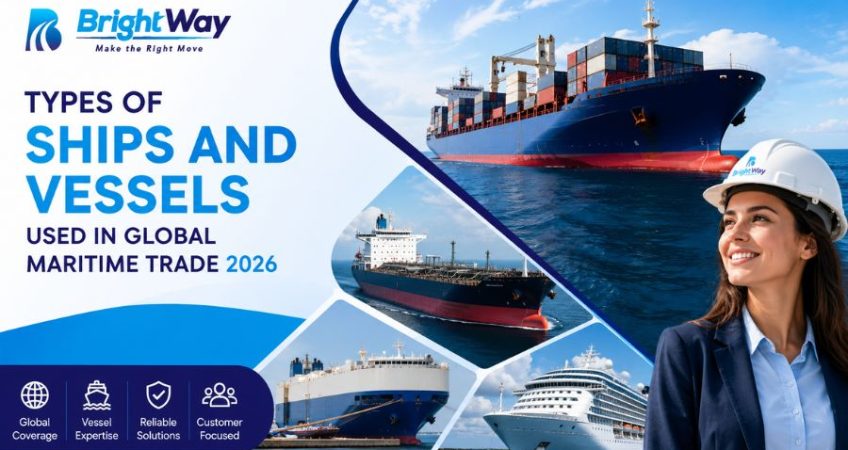
Examine your surroundings. It’s likely that everything you own—your clothes, coffee, and phone—went through a lengthy and complex journey across the ocean using a shipment vessel. More than 90% of global trade is transported by sea, making a vessel in logistics a critical part of the global supply chain. The world economy is essentially powered by a vessel ship network. But what is vessel in shipping? A vessel in shipping refers to any type of ship used to transport goods across waterways.
Whether referred to as a ship vessel or cargo carrier, these enormous ships are engineering wonders built for specific purposes. From carrying millions of barrels of oil to transporting thousands of containers, each vessel ship plays a vital role. Any company that depends on international trade must understand the importance of a vessel in logistics, especially when working with a trusted transport and logistics company in UAE like Brightway Logistics. Choosing the right shipment vessel ensures cost-effective and efficient cargo transportation.



The Workhorse of Trade – Container Ships
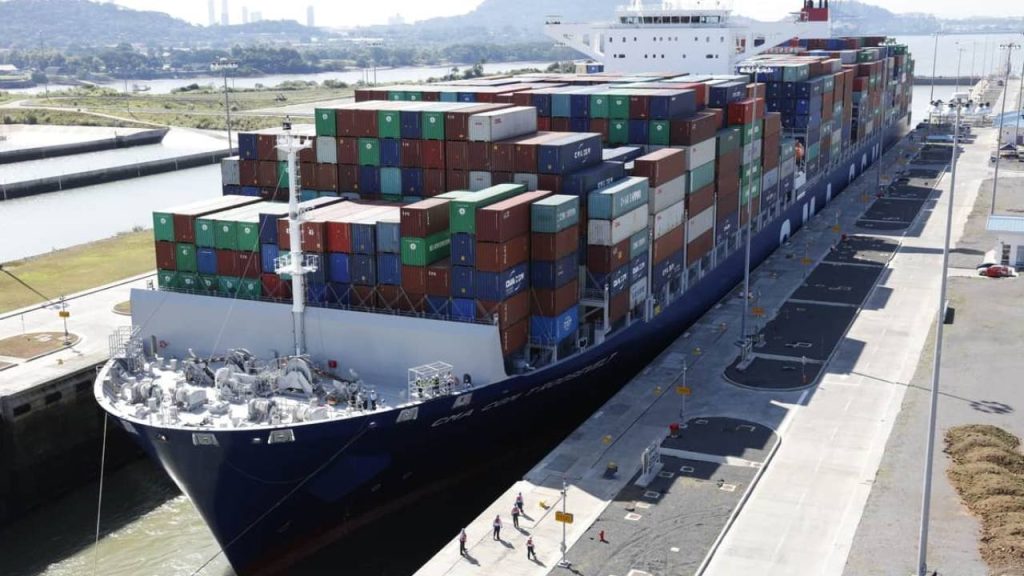
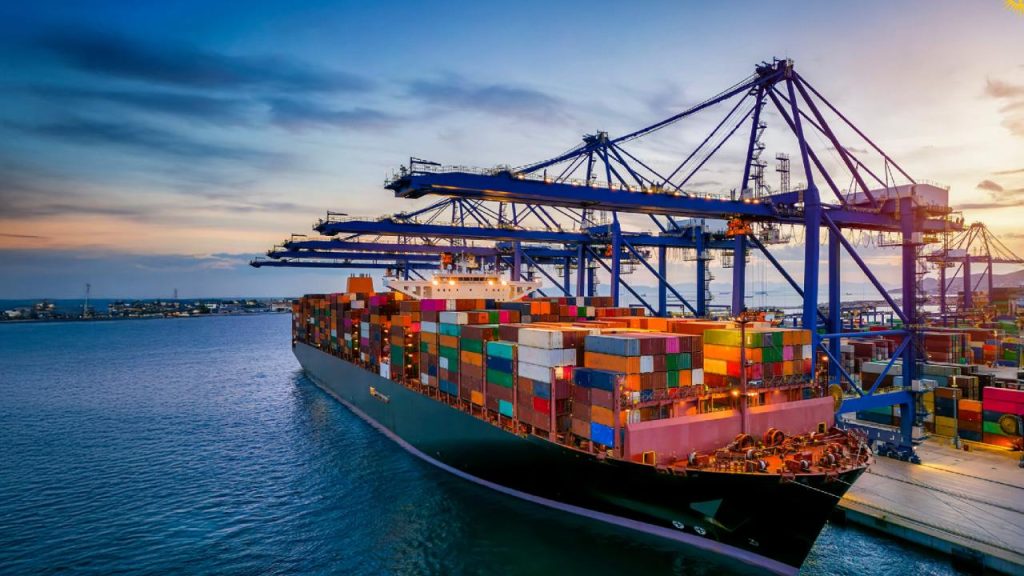
The container ship is the vessel that best embodies contemporary international trade. The most adaptable and frequent sight on the high seas, these ships transport goods in rectangular, standard-sized steel boxes, or containers.
Key Characteristics –
- Capacity – Twenty-foot equivalent units, or TEUs, are used to measure capacity. Today’s biggest ships, called Ultra Large Container Vessels (ULCVs), have the capacity to transport over 24,000 TEUs, a stack of containers that would cover more than 80 miles!
- The System – The foundation of contemporary logistics is intermodal transport, which is made possible by the uniform size of the containers and enables smooth transitions between trucks, trains, and ships.
- Global Impact – For any transport and logistics company in UAE, container ships are essential. They have everything from clothing and electronics to furniture and perishables.
Types of Container Vessels –
- Feeder Vessels – These are smaller ships that transport containers from major international hub ports to smaller regional ports.
- Panamax/Post-Panamax – Sizes are classified as Panamax or Post-Panamax based on their capacity to pass through the Panama Canal locks, both prior to and following the expansion.
Carrying Liquids – Tankers
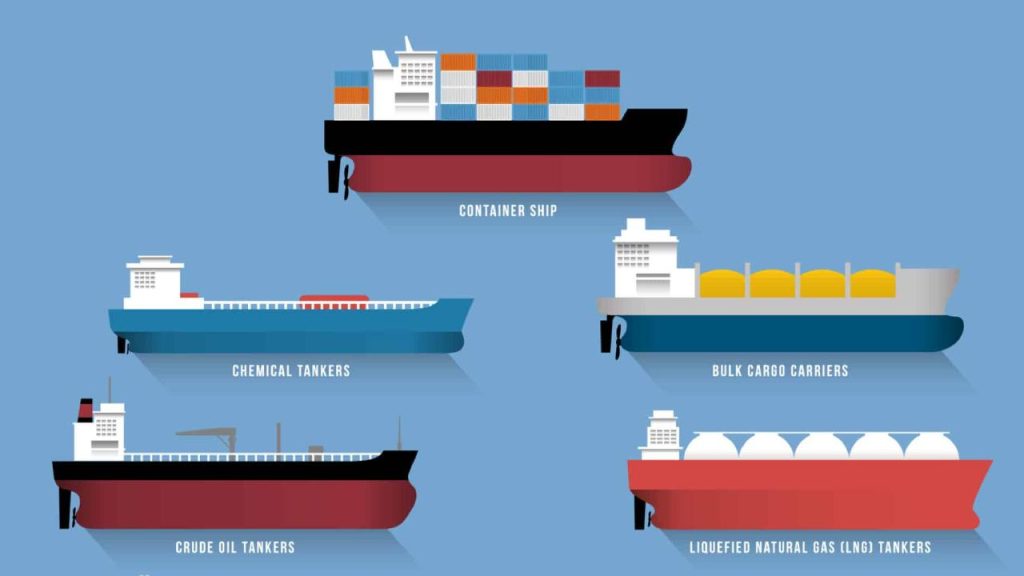
Tankers are specialized ships used in the chemical and energy industries that are built to transport large amounts of liquid cargo.
- Oil Tankers (The Giants) – The most well-known tankers are the Oil Tankers (The Giants), which transport both crude oil and refined petroleum products. The DWT (Deadweight Tonnage), which is the total weight that a ship can safely carry, is used to classify them according to their size.
- AFRAMAX – Usually utilized for short-to-medium haul routes, AFRAMAX tankers are medium in size.
- VLCC (Very Large Crude Carriers) – Usually utilized on long-distance routes from the Middle East, VLCCs (Very Large Crude Carriers) are capable of transporting millions of barrels of oil.
- ULCC (Ultra Large Crude Carriers) – The biggest tankers, known as ULCCs (Ultra Large Crude Carriers), are mostly utilized for strategic oil reserves.
- Safety – In the event of an accident, double hulls on modern tankers help to prevent environmental catastrophes.
- Chemical and Product Tankers – Designed to transport specialized chemicals, juices, or refined petroleum products like gasoline, these ships are smaller than crude oil tankers. To avoid contaminating the delicate chemicals they transport, they frequently have several distinct tanks with specialized coatings (such as stainless steel).
- Carriers of LNG and LPG – Liquefied natural gas (LNG) and liquefied petroleum gas (LPG) are transported by these specialized vessels. For these gases to stay liquid, they must be cooled to extremely low temperatures, or cryogenic conditions. The vessels are easily identifiable due to their unique, spherical or membrane-style tanks. Their intricate cargo management systems necessitate specialized port infrastructure and highly qualified crews.
The Bulk Carriers – Dry Bulk Vessels
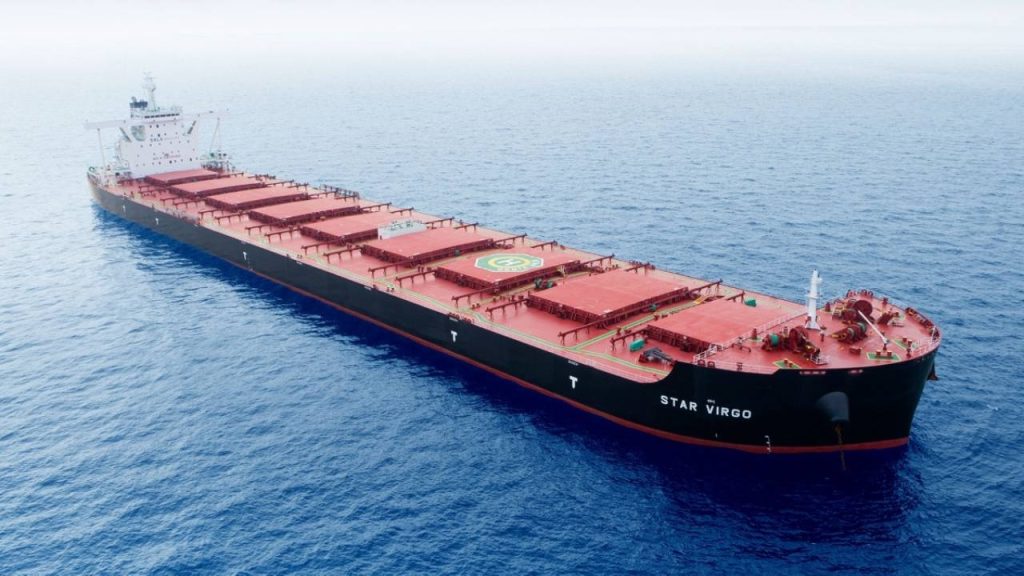
The workhorses of raw, unpackaged, non-liquid commodities are dry bulk carriers. Large, open, self-trimming hatches that open straight into enormous cargo holds are what define them. They transport the basic components that make up and sustain our world.
- What They Carry –
Bulk carriers transport a variety of goods in large quantities, such as –
- Grains – Wheat, corn, and rice.
- Ores – Iron ore, bauxite, and coal.
- Minerals – Cement, salt, and fertilizers.
- Size and Scale –
The largest bulk carriers are referred to as Capesize vessels by DWT, as they are too big to fit through the Panama Canal and must circumnavigate the Cape of Good Hope.
For nations like the United Arab Emirates, which import enormous amounts of raw materials for manufacturing and construction, the safe transportation of these raw materials is essential. Once these goods reach the port, an organization such as Brightway Logistics makes sure they are distributed efficiently.
For UAE industries that depend on imported raw materials for manufacturing and construction, Brightway Logistics’ proficiency in port coordination and terminal handling is essential to the effective handling of dry bulk.
Specialized Transportation – Ro-Ro and Others
Not all cargo can be stored in a tank or a box. Highly specialized transport vessels are needed by some industries.
- Ro-Ro (Roll-on/Roll-off) Vessels – Roll-on/roll-off, or Ro-Ro, vessels are made to transport wheeled goods, mostly vehicles, trucks, large machinery, and construction equipment. The term “Roll-on/Roll-off” refers to the fact that Ro-Ro ships, in contrast to regular ships, have ramps that are built into the ship so that cargo can be driven straight on and off. They resemble multi-story parking garages that are floating on the ocean.
- Reefer Ships – Reefer ships are special ships used to transport perishable items like meat, fruit, and frozen seafood. To maintain exact temperatures and humidity levels during the journey, they are equipped with sophisticated, segmented refrigeration systems.
- Heavy Lift Vessels – These are made to transport extremely big, bulky, and awkward objects, like oil rigs, prefabricated bridge segments, or sizable industrial modules. In order to float cargo onto and off the ship, some can even partially submerge their decks.
- Cruise Ships/Ferries – Cruise ships and ferries are important for the tourism and passenger transportation industries, connecting ports throughout the region, despite not being primarily trade vessels.
How to choose the right vessel for your cargo
Most shippers know what container ships and tankers are — but few know which vessel type is actually right for their specific cargo. The choice depends on cargo nature, volume, port compatibility, and urgency. Picking the wrong vessel can increase your cost by 20–40% or cause port rejection at the destination.
| Cargo type | Best vessel | Cost level | Port compatibility |
|---|---|---|---|
| Boxed goods, electronics, apparel | Container ship (FCL/LCL) | Low–Mid | Most global ports |
| Vehicles, trucks, machinery | Ro-Ro / PCTC | Mid | Ro-Ro enabled ports only |
| Grain, coal, iron ore, cement | Dry bulk carrier | Low | Deep draft ports |
| Crude oil, chemicals, LNG | Tanker / LNG carrier | Mid–High | Specialised terminals |
| Oil rigs, bridge segments, modules | Heavy lift / semi-submersible | High | Open anchorage needed |
| Frozen produce, meat, pharma | Reefer / reefer container | Mid | Cold chain terminals |
Always confirm berth depth and crane availability at your destination port before booking — especially for heavy lift and bulk cargo.
Vessel types your shipment may travel on
Beyond container ships and tankers, global trade runs on a wide fleet of specialised vessels that rarely appear in logistics guides. Multi-Purpose Vessels (MPVs) handle mixed cargo like steel, crates, and project equipment in a single hold. Offshore Supply Vessels (OSVs) are critical for the Arabian Gulf oil industry, moving fuel and equipment to rigs daily. Barges are widely used in GCC coastal construction projects. If your cargo falls into any of these categories, understanding the vessel type helps you ask the right questions when getting a quote.
Green shipping & IMO 2026 regulations — what every shipper needs to know
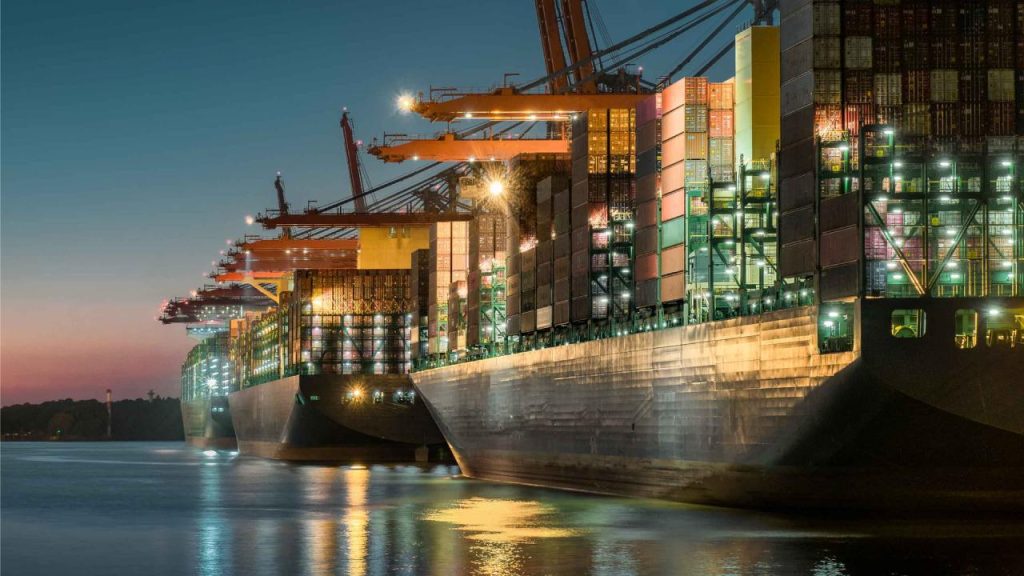
The maritime industry is undergoing its biggest regulatory shift in decades. IMO’s Carbon Intensity Indicator (CII) now rates every commercial vessel from A to E — and ships rated D or E face operational restrictions that can add 3–7 days to your transit. On top of that, the EU Emissions Trading System (EU ETS) adds a carbon surcharge of approximately $30–80 per TEU on Europe-bound routes. New methanol and ammonia-powered vessels are being deployed by major carriers like Maersk and CMA CGM, and DP World is exploring green shipping corridors from Jebel Ali to India and Singapore. As a shipper, you should ask your forwarder for your carrier’s CII rating before booking — especially on long-haul routes.
Vessel size classifications — and why they matter for your shipment
Every vessel class has a standard size range measured in DWT (Deadweight Tonnage) and LOA (Length Overall). These numbers determine whether a ship can physically enter a port. Feeder vessels (100–200m) can access almost any port. Post-Panamax ships (300–366m) require deeper berths like Jebel Ali Terminal 3, which has a controlling depth of ~17m. Ultra Large Container Vessels (400m+) are restricted to selected berths even at major hubs. VLCCs — the giant crude tankers — cannot berth at most ports and must use offshore Single Point Mooring (SPM) systems. Knowing your vessel’s size class upfront prevents last-minute transshipment costs and schedule disruptions.
The Logistics Connection – Why Your Partner Matters
Knowing the vessels is only the first step. A sophisticated logistics partner is necessary for the efficient and profitable operation of your supply chain.
The most important choice for companies taking advantage of the UAE’s advantageous position as a global transshipment hub is selecting the best transport and logistics company in the country. A market leader like Brightway Logistics provides the necessary tools for reducing risks and increasing efficiency, in addition to basic booking.
Among these specialized services are –
- Cargo Consolidation – For cost savings, cargo consolidation involves combining smaller shipments (LCL, or less than container load) into a single container.
- Customs Brokerage – Skilled management of intricate documentation and declarations to guarantee quick, easy customs clearance in crowded ports.
- Warehousing & Distribution – After the cargo departs the port, it provides safe storage and a well-organized last-mile delivery by truck or air freight.
- Real-time tracking – Giving customers clear insight into the whereabouts of their cargo, whether it’s on a bulk carrier or a ULCV.

A trustworthy transport and logistics company in UAE will manage the intricate details of customs clearance, port operations, and final delivery, in addition to locating the ideal vessel for your cargo. End-to-end solutions are provided by services like those provided by Brightway Logistics. No matter what kind of enormous vessel transports your cargo, they provide services that expedite the entire process, such as freight consolidation, documentation, and tracking, guaranteeing a smooth transition from the manufacturer to your destination.