
Containers in logistics are large, standardized steel boxes used to move, store, and protect goods during supply. They make it easy to move cargo between ships, trains, and trucks, therefore speeding up international trade, reducing delivery time, and reducing damage to goods.
Containers in logistics are one of the core foundations of the world’s economies. According to industry estimates, around 90% of the world’s goods are moved through containerized shipping, making them a cornerstone of modern logistics, enabling smooth movement of goods across borders. Utilized across standardized types, they allow secure transport whether through ships, trains, or trucks, keep the goods safe, and reduce the risks of damage.
- What are Logistics Containers?
- Types of Containers in Logistics
- Dry Containers
- High Cube Containers
- Refrigerated Containers (Reefers)
- Flat Rack Containers
- Open Top Containers
- Tank Containers (ISO Tanks)
- Open Side Containers
- Double-Door (Tunnel) Containers
- Insulated (Thermal) Containers
- Pallet-Wide Containers
- Swap Body Containers
- Half-Height Containers
- Intermediate Bulk Containers (IBCs)
- Special Purpose Containers
- Container Dimensions — 20ft vs 40ft vs 40ft High Cube
- How Many Pallets Fit in a Container?
- FCL vs LCL — Which Container Option Fits Your Shipment?
- Functions of Containers in Logistics
- Why are Logistics Containers Important?
- Types of Containers in Logistics
What are Logistics Containers?
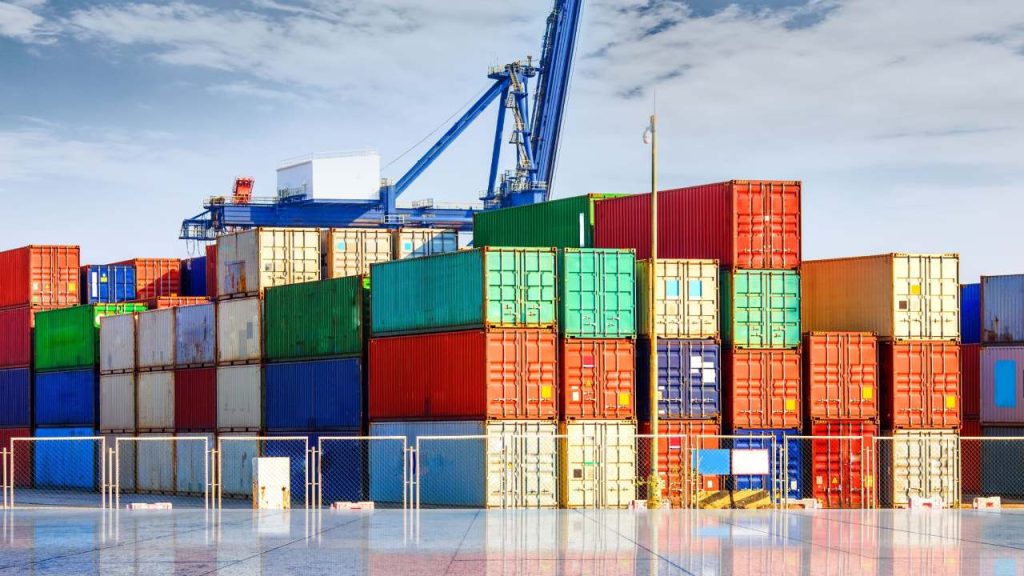
Logistics containers are standardized large steel boxes designed to store and transport goods from one place to another safely and efficiently. They are usually made up of Corten steel, which is often referred to as the weathering steel. Corten steel is a highly specialized metal alloy that can handle harsh weather conditions, resists corrosion, and can bear extreme weight.
Standard Dimensions of Logistics Containers:
- 20-foot equivalent unit (TEU): A standard base measure for capacity.
- 40-foot equivalent unit (FEU): A common unit made for larger volume freight.
- High Cube: Taller volume units, usually of 9.5 feet, made to handle large volume.



Types of Containers in Logistics
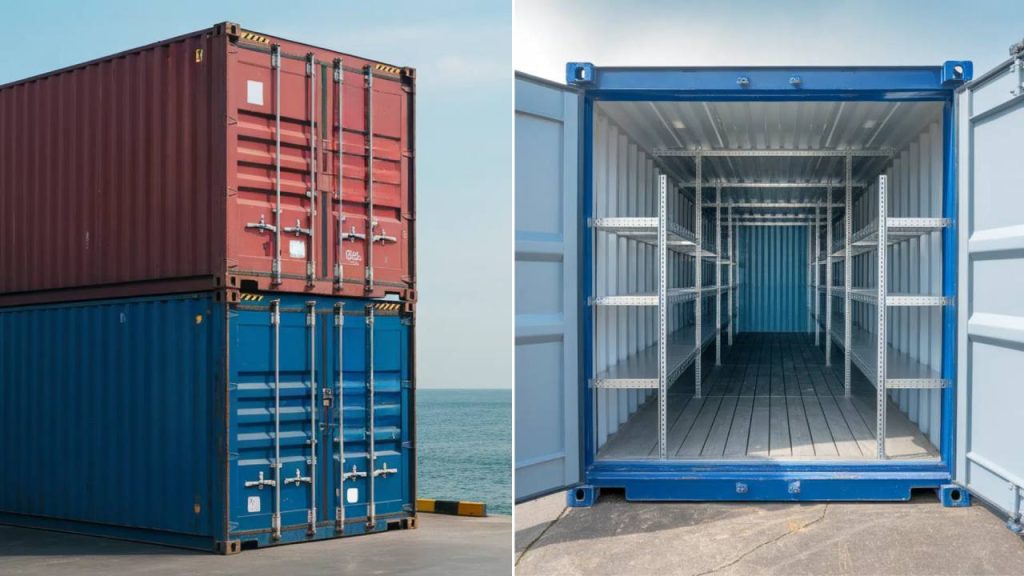
The reason why different types of containers in the logistics industry are used is that goods have varying requirements in terms of dimensions, weight, and temperature. Specialized containers are made to meet these requirements, ensuring safe, secure, and efficient transportation.
Here are the types of containers utilized by every transport and logistics company in UAE:
Dry Containers
Dry containers are the most common type of logistics containers. They come in standard size, fully enclosed, ensuring that air and water do not cause any damage to the goods inside. They are used for non-perishable cargo, like boxes, pallets, and electronics.
High Cube Containers
High Cube Containers are similar to dry containers, but usually larger in size, around one foot taller, which is 9.5 feet high. This type of container is ideal for cargo that requires extra vertical space, like industrial equipment, aviation components, and non-stackable goods, etc, frequently used by those who choose sea freight services.
Refrigerated Containers (Reefers)
Refrigerated Containers, also known as Reefers, are specialized temperature-controlled storage units. These are used to store and transport perishable goods, such as pharmaceuticals, dairy, food, and flowers.
Flat Rack Containers
Flat Rack Containers are highly durable containers with no roof or sidewalls, featuring just a flatbed with two collapsible or fixed ends. These containers are commonly used by land freight services to safely handle and transport goods, like industrial machinery, vehicles, and construction materials.
Open Top Containers
Open Top Containers, by the name itself, have no steel roof, which is replaced by a waterproof tarp and bows. Open top containers are used in logistics to transport oversized, tall, or heavy goods, which are often handled by a crane from above.
Tank Containers (ISO Tanks)
Tank Containers or ISO Tanks are specialized cylindrical steel containers, covered in a steel frame. They are specifically made to transport chemicals, oils, juices, and other hazardous and non-hazardous fluids.
Open Side Containers
Open Side Containers in logistics are different from standard types of containers. Specifically constructed to open from one side with fold-out doors, they enable full-width side access for oddly shaped goods, long pipelines, and heavy machinery.
Double-Door (Tunnel) Containers
These containers have doors on both ends instead of just one, allowing cargo to be loaded and unloaded from either side. They’re ideal for long goods like steel, pipes, or bulk cargo that need faster, dual-access handling.
Insulated (Thermal) Containers
Lined with insulation but without an active cooling system, these containers passively moderate temperature fluctuations. They’re best suited for short-distance transport of mildly temperature-sensitive goods where full refrigeration isn’t necessary.
Pallet-Wide Containers
Slightly wider than standard containers, these are designed to fit two Euro pallets side-by-side without wasted space. They’re widely used across Europe and North America to maximize loading efficiency.
Swap Body Containers
Built specifically for road and rail transport rather than sea freight, swap bodies offer a lightweight design with optimized pallet capacity. They’re commonly used for regional and short-haul logistics movements.
Half-Height Containers
Made mostly of steel and standing at half the height of standard units, these containers are designed for easy loading and unloading of dense bulk cargo. They’re frequently used for goods like coal, stones, and other heavy bulk materials.
Intermediate Bulk Containers (IBCs)
These come in rigid, collapsible, or flexible forms and are used to transport liquids, powders, or granular goods like chemicals, food-grade products, or fertilizers. Unlike standard ISO containers, IBCs are often used for smaller-volume bulk shipments within a larger supply chain.
Special Purpose Containers
Custom-built to match unique cargo dimensions or shapes that standard containers can’t accommodate, these are used when no conventional container type fits the job. They’re costlier to produce but essential for niche or oversized shipments.
Choosing the right container — whether standard or specialized — directly impacts cargo safety, cost-efficiency, and delivery timelines, making it a critical decision for any shipment moving through UAE ports.
Container Dimensions — 20ft vs 40ft vs 40ft High Cube
| Container | External (L x W x H) | Internal (L x W x H) | Tare Weight | Max Payload | Cubic Capacity |
|---|---|---|---|---|---|
| 20ft Standard | 6.06m x 2.44m x 2.59m | 5.90m x 2.35m x 2.39m | ~2,300 kg | ~28,180 kg | ~33 CBM |
| 40ft Standard | 12.19m x 2.44m x 2.59m | 12.03m x 2.35m x 2.39m | ~3,750 kg | ~26,730 kg | ~67 CBM |
| 40ft High Cube | 12.19m x 2.44m x 2.90m | 12.03m x 2.35m x 2.70m | ~3,900 kg | ~26,580 kg | ~76 CBM |
How Many Pallets Fit in a Container?
| Container | Standard Pallets (Single Stack) | Euro Pallets (Single Stack) |
|---|---|---|
| 20ft | 10-11 | 11-12 |
| 40ft | 20-21 | 23-24 |
| 40ft HC | 20-21 | 23-24 (double-stack possible for light cargo) |
FCL vs LCL — Which Container Option Fits Your Shipment?
- FCL (Full Container Load): When your shipment is 15+ CBM, book a full container. It is cost-effective and faster because there are no consolidation delays.
- LCL (Less than Container Load): When your shipment is 1–14 CBM, share a container with other shippers and pay on a per-CBM basis.
Functions of Containers in Logistics
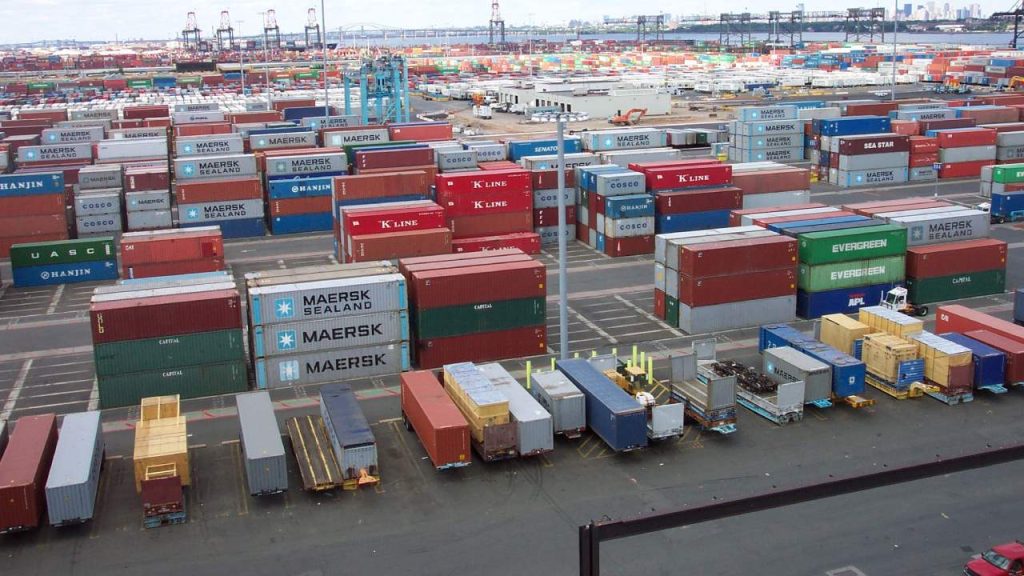
Here are the functions of containers in the logistics industry:
- Intermodal Transportation
Logistics containers are designed and constructed in specific container sizes and dimensions, making handling and transfer easy for the cranes. They eliminate the need to unload and reload the goods, enabling direct placement to ships, truck chassis, or rail flatcars, making it easy for any transport and logistics company in UAE to facilitate safe movement of goods.
- Cargo Protection
Containers provide high protection to the goods, whether from temperature, water, or corrosion; they protect goods, ensuring safe transportation, maintaining the reputation of the supplier, and high customer satisfaction. Usually made of corten steel or aluminium and steel in air freight services, they also cater to specialized needs.
- Space Utilization
By utilizing the large space of containers for small goods, it makes it easy for freight forwarders, especially in UAE imports and exports, to track inventory, counting, and billing. In addition, logistics containers allow the shipper to use the larger space efficiently to transport small packages or bulk goods into a single unit.
- Temporary and Mobile Storage
Storage containers are widely used on construction sites and retail businesses for storing equipment, tools, and supplies. They are also frequently used at port terminals until customs clearance is completed and onward transport is available.
Why are Logistics Containers Important?
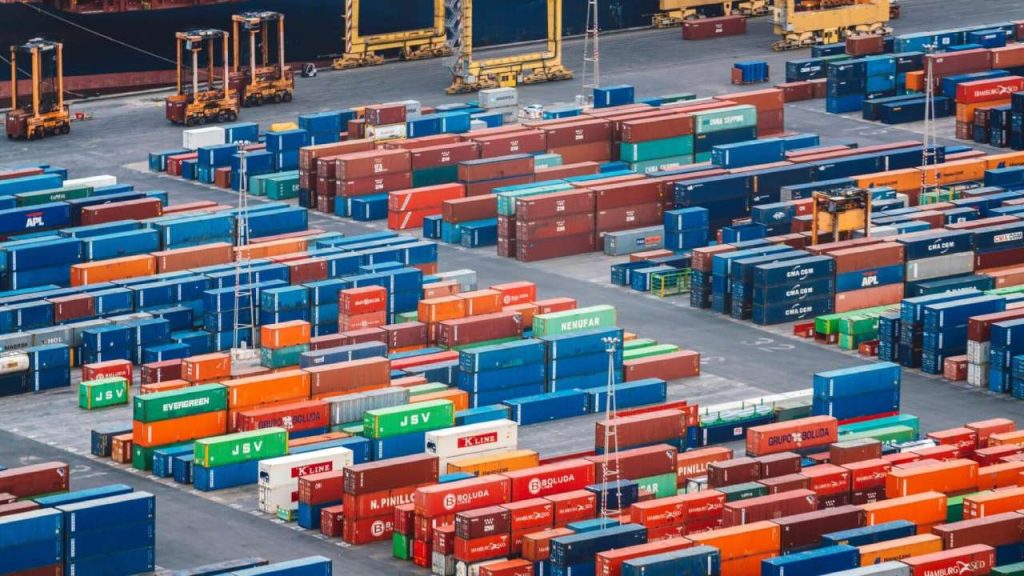
Here is why the containers in logistics industry are important:
- Intermodal Efficiency: The standardized container sizes make the transition from one transport mode to another seamless and easy. They can be loaded onto trucks, rail, or ships, as per the transport requirement.
- Cost and Time Savings: By transporting bulk goods in containers, you can save on the high cost and time of moving individual packages one by one.
- Cargo Security and Protection: Containers feature sturdy sealing and locking systems, protecting goods from theft, harsh weather conditions, and saltwater during sea freight, and especially tempering.
- Versatility: Brightway Logistics provides specialized cargo containers that are available in various types to accommodate different storage and transportation requirements. This includes reefers for temperature-sensitive goods, or tank containers for hazardous and non-hazardous liquids and gases.
Conclusion
Cargo containers in logistics are considered an important component in ensuring a safe, efficient, and cost-effective transportation of goods. With standardized designs, they provide convenience for different types of storage and transportation needs to simplify and make the supply chain smoother across borders.
Brightway Logistics Services LLC is a trusted transport and logistics company in UAE, providing the best logistics solutions matching our clients’ requirements. We offer a wide range of services, including air, sea, and land freight, warehousing, and customs clearance services, ensuring cost-effectiveness and high client satisfaction. Therefore, trust us and reach out to us to get the best transport and logistics services in the UAE.
Also Read:
Frequently Asked Question
What are the main types of logistics containers?
Dry, High Cube, reefer, flat rack, open top, and ISO tank containers, plus open side, double-door, insulated, pallet-wide, swap body, half-height, IBC, and special purpose containers.
What are the four common types of containers?
Dry, reefer, flat rack, and open top. Dry containers are the most widely used.
What is a 20-foot container called?
A TEU (twenty-foot equivalent unit). A 40-foot container is an FEU. A 40ft High Cube is about 9.5 feet tall.
How many tons can one container carry?
A 20ft container carries about 28 tons, a 40ft about 26.7 tons, and a 40ft High Cube about 26.6 tons.
Which container carries liquids like water or chemicals?
ISO tank containers carry liquids such as chemicals, oils, and juices. IBCs handle smaller bulk liquid or powder shipments.
When should I choose FCL or LCL?
FCL (full container) suits shipments of about 15+ CBM. LCL suits 1–14 CBM, where you share space and pay per CBM.