
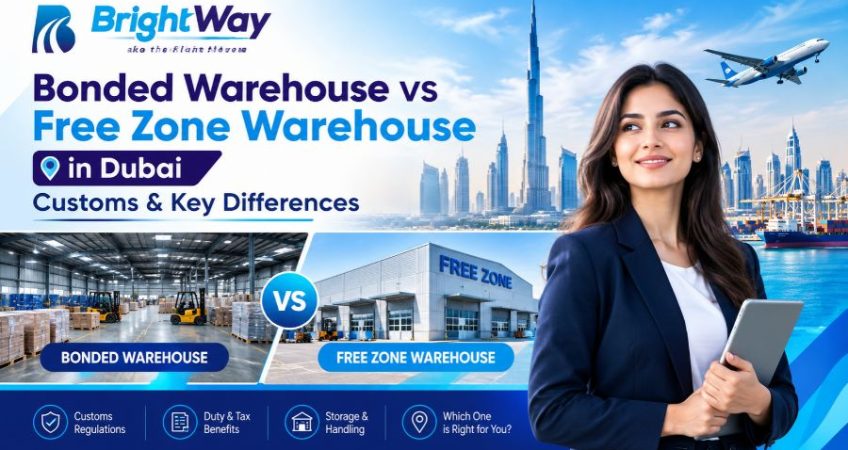
A bonded warehouse in Dubai lets you store imported goods under Dubai Customs supervision with import duties suspended until the goods enter the UAE market. A free zone warehouse sits inside a designated free zone, where customs duty is generally not charged while goods remain in the zone, but duty and VAT may apply once they move to the mainland. In both cases, goods can be re-exported without UAE import duty, subject to the required documentation.
Both bonded and free zone warehouses are secure storage options where goods are held before entering the local UAE market. They differ in customs procedures, duty treatment, and operating requirements. Choosing the right one helps you manage your supply chain and avoid delays that can frustrate customers.
This guide explains how each option works, the key differences, the customs process for each, and how to choose the right one for your business.
- What Is a Bonded Warehouse in Dubai?
- What Is a Free Zone Warehouse in Dubai?
- Bonded Warehouse vs Free Zone Warehouse: Main Differences
- How Do They Differ Based on Customs Procedures?
- Step-By-Step Customs Process of Bonded Warehouses
- Complete Customs Process for Free Zone Warehouse in Dubai
- Bonded Warehouse vs Free Zone Warehouse: Which One To Choose
What Is a Bonded Warehouse in Dubai?
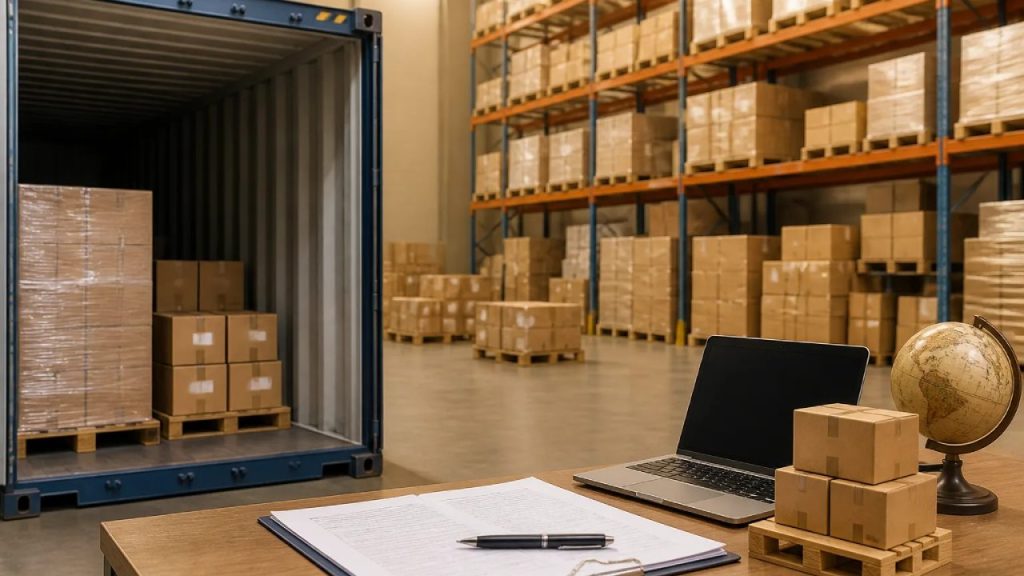
A bonded warehouse Dubai is a highly secure storage facility where businesses keep their imported goods without immediately paying import duties. In addition to that, excise taxes and VAT (Value Added Tax) are determined based on the nature of the imported good and relevant tax rules.
Main features of a bonded warehouse in Dubai:
- The facility operates under Dubai Customs.
- Importers do not pay the customs duty immediately.
- The duties are only paid when the goods leave the warehouse for the local UAE market.
- If imported goods are about to be shipped to another country, there are no local import duties or VAT applied to them.
VAT and excise treatment depends on the type of goods and the tax rules that apply to them. Confirm the position with the Federal Tax Authority or a tax advisor before moving goods.



What Is a Free Zone Warehouse in Dubai?
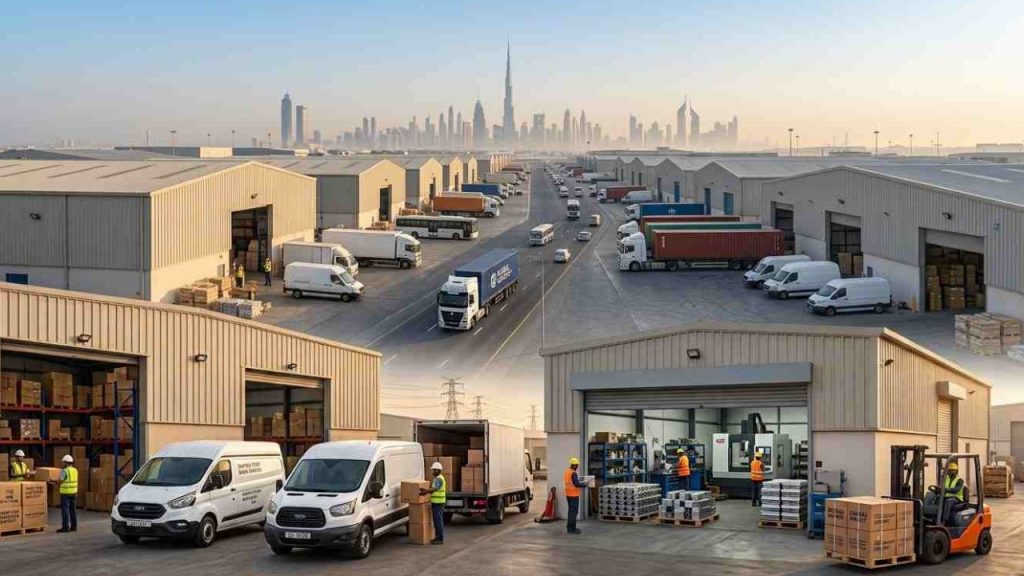
A Free Zone warehouse Dubai refers to a storage and distribution facility that is located within the designated Free Zone. Businesses generally do not have to pay import customs duty while the goods remain in the Free Zone. However, relevant customs duty and VAT can apply when they enter the UAE mainland jurisdiction.
Benefits of a Free Zone warehouse in Dubai:
- Customs duty is generally not charged while goods remain inside the free zone.
- Goods can be stored, handled, and re-exported with simplified procedures.
- Warehouses are located in logistics hubs such as Jebel Ali Free Zone (JAFZA), Dubai South, Dubai Airport Freezone (DAFZA), and Dubai Industrial City.
- Businesses licensed in a free zone may also benefit from full foreign ownership and, if they qualify as a Qualifying Free Zone Person, a 0% corporate tax rate on qualifying income. Non-qualifying income may be taxed at the standard 9% rate.
VAT treatment depends on whether the free zone is a Designated Zone under UAE VAT law, and on the goods and the nature of the movement. Not every free zone qualifies, so confirm this with a tax advisor.
Bonded Warehouse vs Free Zone Warehouse: Main Differences
Here is a table differentiating the bonded warehouse and Free Zone warehouse:
| Factor | Bonded Warehouse | Free Zone Warehouse |
|---|---|---|
| Customs status | Goods held under Dubai Customs control with duty suspended | Goods held under free zone customs rules, outside mainland duty until they enter it |
| Location | Can be on the mainland or at approved sites | Must be inside a designated free zone |
| Who can use it | Registered importers storing goods with a licensed operator | Companies licensed by the free zone authority |
| Primary purpose | Duty-suspended storage and re-export | Storage, trading, distribution, and re-export |
| Local trading | Duty is paid when goods are released to the UAE market | Trading within the zone is allowed under license; mainland sales need import clearance |
| Regulator | Dubai Customs | Free zone authority, with Dubai Customs |
| Duty on mainland entry | Customs duty (commonly 5%, varies by HS code) and VAT as applicable | Same, as applicable |
| Setup requirement | Dubai Customs authorization or a licensed bonded operator | Free zone license and approvals |
How Do They Differ Based on Customs Procedures?
The primary differences between a bonded warehouse and a Free Zone warehouse in Dubai regarding customs procedures are based on customs declarations, goods monitoring, and the clearance process. A bonded warehouse follows processes approved by Dubai Customs, whereas a Free Zone warehouse follows procedures applicable to its specific Free Zone.
However, if you are moving goods into the UAE mainland, you may be required to file an import declaration, complete customs clearance, and pay applicable customs duties and VAT, as per the regulations, in both cases.
Step-By-Step Customs Process of Bonded Warehouses
Look at the step-by-step customs clearance process for bonded warehouse storage Dubai:
- Pre-Arrival and Registration
- Set up your account through the official Dubai Customs portal and acquire a valid registration number.
- Prepare necessary documents, including commercial invoices, packing lists, bills of lading or air waybills, certificate of origin, and other relevant essentials.
- Sign a formal storage agreement with the specific Dubai Customs-licensed bonded warehouse operator in Dubai.
- Inbound Declaration and Transfer
- When your goods arrive in the country, consider filing a warehousing declaration through the official Dubai Trade by providing HS codes, values, and cargo weights.
- Pass through the Dubai Customs inspection, which the authorities may perform before authorizing the transfer.
- After approval, you can move the goods directly to the bonded storage facility under customs supervision.
- Storage and Inventory Control
- Make sure the specific bonded warehousing operator you have chosen has a dedicated system for inventory tracking.
- Also, confirm the storage limit periods and extensions, if applicable.
- Release or Re-Export
- If you want to move those goods into the mainland market of the UAE, make sure you complete the import declaration, duties, VAT, and other requirements.
- If you are re-exporting the cargo to other international markets, file a re-export declaration and complete other requirements, if applicable.
Complete Customs Process for Free Zone Warehouse in Dubai
Follow this step-by-step customs process for Free Zone warehouse storage Dubai:
- Importing Goods into the Free Zone
- Get a Dubai Customs importer code by registering your business through the official Dubai Trade portal.
- Submit a declaration for importing goods and gather relevant documents such as bill of lading or air waybill, commercial invoice, packing lists, certificate of origin, and others.
- Moving from Free Zone to Mainland
- If you are moving goods from a Free Zone to the mainland jurisdiction, you need to pay the required and relevant customs duty, VAT, and other applicable charges.
- Re-Exporting Goods
- If those goods are being re-exported to another country from the Free Zone, they may be subject to no UAE customs duty, although certain documents may be needed.
- When you move goods to another Free Zone from the warehouse in Dubai, you may need a formal transfer declaration and system acknowledgement, depending on the transfer process.
Bonded Warehouse vs Free Zone Warehouse: Which One To Choose
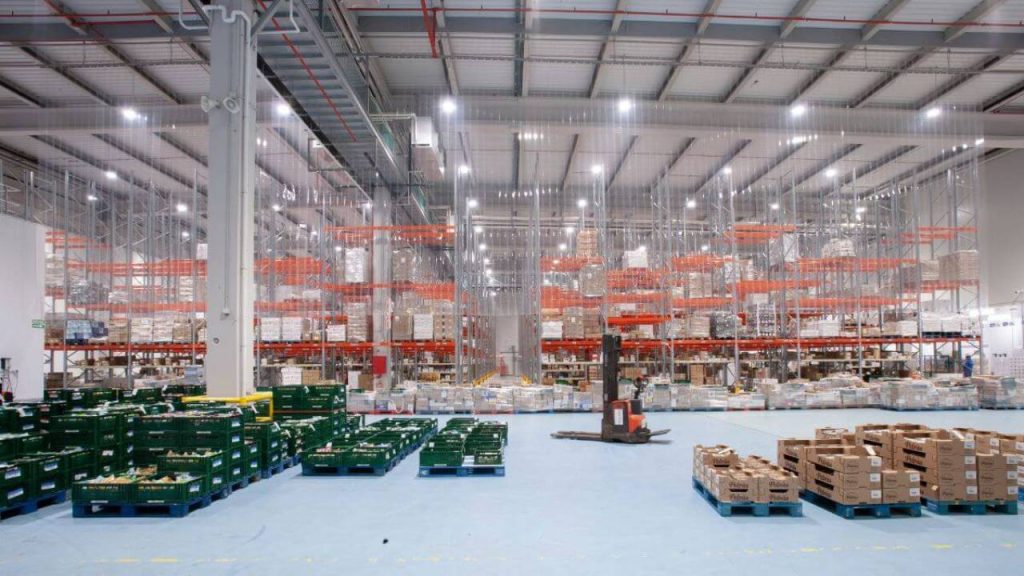
Look below to understand which one to choose: a bonded warehouse or a Free Zone Warehouse Dubai:
Choose a Bonded Warehouse Dubai If:
- You need to defer the UAE customs duty on the goods you have imported into Dubai.
- You want to re-export those goods after using the warehousing services in UAE.
- You are looking to store goods under the supervision of Dubai Customs.
Choose a Free Zone Warehouse Dubai If:
- Your business is a Free Zone entity with a Free Zone trading license.
- You frequently import or re-export goods to the international markets.
- You need warehouse storage that is linked to a Free Zone or distribution activities.
Customs and tax rules change. Confirm current requirements with Dubai Customs, the relevant free zone authority, or a qualified advisor before making decisions.
Conclusion
Bonded warehouse and Free Zone warehouse in Dubai are both used as storage facilities for imported goods. However, they differ based on customs procedures, clearance process, and other factors. By understanding the differences between them based on customs status, purpose, duty payment, compliance, and other dissimilarities, you can defer import duties, reduce delay risks, and maintain compliance with customs regulations.
If you are a business looking for trusted and licensed warehousing facilities in Dubai, you can connect with Brightway Logistics. As a professional freight forwarding and transport company in Dubai, we offer reliable bonded warehousing and Free Zone warehousing facilities.
Our professional team also assists you through the customs clearance process, documentation, duties, taxes, VAT, and other procedures, providing consistent support. Thus, trust us and reach out to us to secure the most dependable warehousing services in Dubai.