
Somewhere in a logistics warehouse right now, a manager is staring at a spreadsheet trying to figure out why their inventory numbers don’t match reality. Somewhere else, a driver is stuck in traffic on Sheikh Zayed Road because no one updated the route plan this morning. These aren’t catastrophic failures — they’re just the everyday friction that quietly bleeds money out of logistics operations.
AI and automation were built for exactly this kind of friction. Not the dramatic stuff, but the daily grind of decisions that need to be made faster, more accurately, and with less human error than traditional systems allow. This is where AI logistics, smart logistics, and logistics automation are changing the industry.
AI and automation optimize logistics by improving efficiency, reducing costs, and enhancing supply chain visibility. That’s the short version. The longer version — the one that actually helps you understand what’s changing and why it matters — is what this article is about.
Today, businesses across the UAE and GCC are investing in AI supply chain systems and automated logistics solutions to improve delivery speed, warehouse accuracy, fleet management, and customer satisfaction. From predictive route planning to automated documentation and real-time shipment tracking, logistics is becoming smarter, faster, and more reliable than ever before.



1. AI Is Transforming Logistics — But What Does That Actually Look Like?
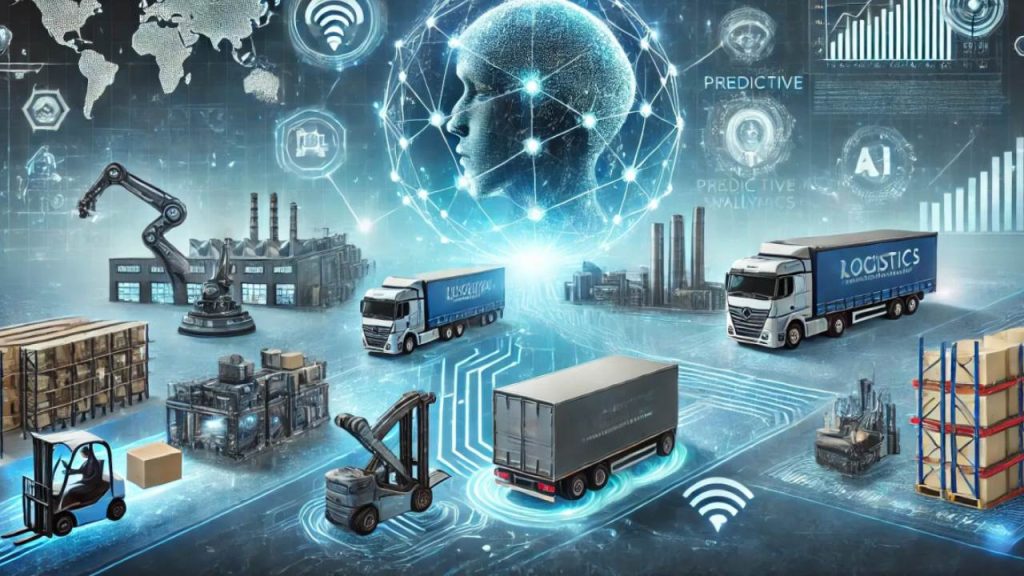
Artificial Intelligence and automation are transforming the logistics industry by improving efficiency, reducing operational costs, and enhancing real-time decision-making. These technologies enable businesses to optimize routes, predict demand, and automate warehouse operations.
That sounds impressive. But the more useful question is: where specifically does AI show up in a logistics operation, and what does it replace?
The honest answer is that AI doesn’t replace logistics expertise — it amplifies it. A good freight manager with AI-powered tools can make decisions in minutes that would previously take hours of data analysis. A warehouse team with automation handles three times the throughput with the same headcount. The technology multiplies capability — it doesn’t substitute for it.
Key Areas Where AI Is Already Delivering Results in UAE Logistics:
- Demand forecasting — predicting what stock is needed, where, and when
- Route optimization — finding the fastest, cheapest path through live traffic and border data
- Warehouse automation — managing inventory movement with minimal human intervention
- Customs and documentation processing — AI-assisted form completion and compliance checks
- Customer communication — automated shipment updates and exception alerts
- Freight rate analysis — comparing carrier rates and recommending optimal options
Each of these was previously a manual process. Each one carried the risk of human error. AI doesn’t eliminate that risk completely — but it reduces it significantly.
2. Demand Forecasting and Inventory Intelligence — Stop Guessing
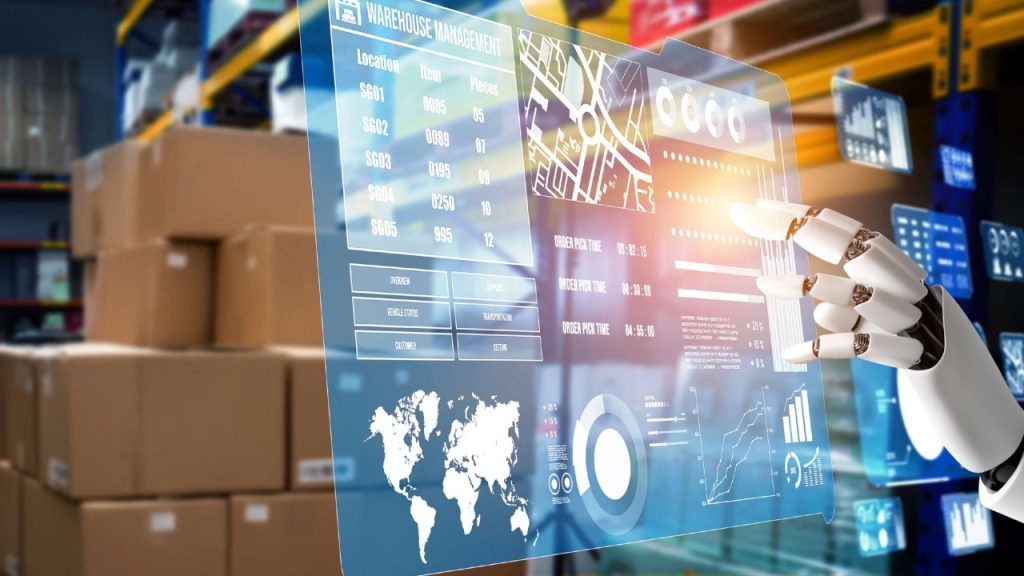
AI-driven analytics help logistics companies forecast demand fluctuations, optimize inventory levels, and reduce wastage. Machine learning algorithms analyze historical data to make accurate predictions, helping businesses avoid stock shortages or overstocking.
Here’s the problem that demand forecasting actually solves. Most businesses operating distribution hubs in the UAE are serving markets across the GCC, parts of Africa, and South Asia simultaneously. Each market has its own demand patterns, its own seasonal spikes, its own disruption risks. Managing inventory manually across that complexity is nearly impossible — you’re always either overstocked somewhere or scrambling to reorder somewhere else.
Machine learning changes this by identifying patterns that human analysts simply can’t spot at scale. Not just obvious seasonality — but subtler signals. A particular product category that consistently moves faster in the lead-up to Ramadan in specific markets. A supplier whose lead times creep up by 15% every August. These patterns exist in the data. AI finds them and acts on them before they become problems.
What Smart Demand Forecasting Delivers:
- Reduced dead stock — capital isn’t tied up in inventory that isn’t moving
- Fewer emergency reorders — which are always more expensive than planned procurement
- Better supplier negotiations — when you know what you need and when, you have leverage
- Lower warehousing costs — optimized inventory means less space required
- Improved service levels — right stock, right place, right time
For logistics operators and their clients across the UAE, this translates directly into healthier margins and more predictable operations.
3. Warehouse Automation — From Clipboards to Smart Systems

Automation in logistics is revolutionizing warehouses and transportation. Robotic process automation (RPA) handles repetitive tasks such as inventory management, while autonomous vehicles and drones are being tested for last-mile deliveries.
Warehouses have historically been labour-intensive, error-prone environments. Manual picking, paper-based stock records, and human-dependent quality checks create inefficiencies that compound over time. RPA and physical automation are changing this at every level.
In UAE logistics hubs, the shift is already visible. Automated sorting systems, conveyor networks with smart routing logic, and RFID-based inventory management have replaced manual processes in the most modern facilities. The result is faster order processing, fewer picking errors, and significantly higher throughput — all without a proportional increase in headcount.
Last-mile delivery automation is still maturing in the UAE market — drone delivery regulations are still being developed, and fully autonomous vehicles face real operational constraints in urban environments. But for warehouse and mid-mile operations, automation is not a pilot programme. It’s already running.
Warehouse Automation Technologies in Active Use:
- Robotic Process Automation (RPA) for inventory updates, order processing, and reporting
- Automated conveyor and sorting systems for high-volume fulfilment centres
- RFID-based stock tracking — no manual scanning required
- Automated guided vehicles (AGVs) for internal warehouse movement
- AI-powered quality control cameras that flag damaged goods automatically
- Smart dock scheduling systems that reduce vehicle waiting times
4. AI and Automation in Logistics — At a Glance
Here’s a practical summary of the key technologies, what they do, and the real-world benefit each one delivers:
| Technology | What It Does in Logistics | Real Business Benefit |
| AI Demand Forecasting | Analyses historical data to predict future inventory needs | Fewer stockouts, less dead stock, lower costs |
| Route Optimization AI | Processes live traffic, weather and road data to find best routes | Faster deliveries, lower fuel costs, happier clients |
| Robotic Process Automation | Automates repetitive admin — stock updates, order processing | Reduced errors, faster processing, lower labour cost |
| Warehouse AGVs | Autonomous vehicles move stock inside warehouses | Higher throughput without proportional headcount increase |
| AI Customs Processing | Assists with documentation, HS code classification, compliance | Faster clearance, fewer errors, reduced delays |
| Predictive Maintenance AI | Monitors fleet health data to flag issues before breakdown | Reduced vehicle downtime, lower repair bills |
| Last-Mile Delivery AI | Optimizes final delivery routing and time-window scheduling | Improved delivery success rates and customer satisfaction |
5. Route Optimization — The Quiet Cost Saver Most Companies Underestimate
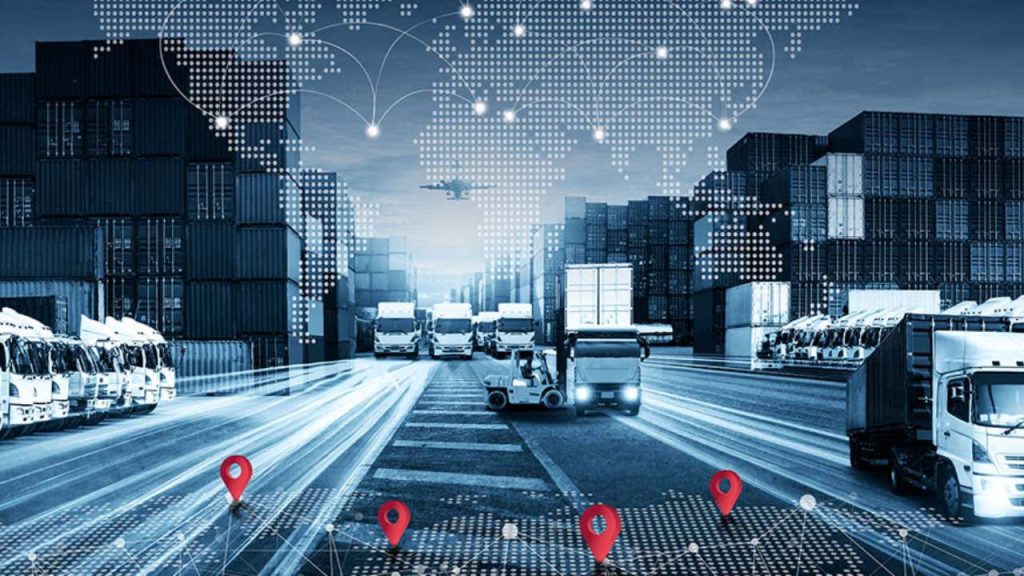
One of the biggest advantages of AI in logistics is route optimization. AI-powered systems analyze traffic, weather, and road conditions to suggest the fastest and most fuel-efficient routes, reducing delivery times and costs.
This sounds straightforward — but the scale of the impact surprises most people when they see the numbers. Fuel is one of the largest variable costs in any trucking or last-mile delivery operation. In the UAE, where temperatures push vehicles harder and GCC cross-border routes can add hours of variability, route inefficiency compounds quickly.
A driver choosing a route manually based on experience is working with limited, static information. An AI route optimization system is processing live data from thousands of sources — real-time traffic feeds, weather alerts, border crossing wait times, road closure notifications — and recalculating the optimal path continuously. Not once before departure. Continuously, throughout the journey.
For a fleet running 50 vehicles, the difference between manual routing and AI-optimized routing can translate to meaningful fuel savings monthly — plus faster delivery times, fewer late arrivals, and reduced driver overtime. None of those are small numbers.
What AI Route Optimization Accounts For:
- Live traffic conditions — not historical averages, but what’s happening right now
- Weather alerts — fog, sandstorms, and rain affect UAE routes more than people plan for
- Border crossing wait times for GCC shipments into Saudi Arabia, Oman, Qatar
- Vehicle load and capacity constraints — heavier loads need different route planning
- Delivery time windows — ensuring the right sequence of stops to meet commitments
- Fuel station locations for long-haul GCC routes
6. The Honest Part — AI Implementation Isn’t Plug and Play

However, implementing AI and automation requires significant investment and technical expertise. Companies must ensure proper integration with existing systems and train employees to manage automated processes.
This is the part that tends to get glossed over in technology articles, so it’s worth spending a moment on it. AI systems don’t deliver value the moment you buy them. They need data to learn from — and most logistics companies don’t have their data in the clean, structured format that AI systems require. Fixing that takes time.
Integration with existing warehouse management systems, TMS platforms, and ERP software is rarely seamless. There are compatibility issues, workflow redesigns, and usually a period where the new system and old habits create friction rather than efficiency. This is normal. It’s also why implementation timelines tend to run longer than vendors initially suggest.
Employee training is equally important. Automation doesn’t eliminate the need for skilled logistics professionals — it changes what those professionals need to be skilled at. Someone who previously spent their day manually updating spreadsheets now needs to understand how to interpret AI-generated recommendations and know when to override them. That’s a different skill set, and building it takes time and investment.
What Successful AI Implementation Requires:
- Clean, structured data from existing systems before AI tools are introduced
- Realistic implementation timelines — typically 3 to 9 months for meaningful integration
- Employee training and change management — not just IT deployment
- Phased rollout — start with one high-impact area, prove the value, then expand
- Ongoing monitoring — AI models need to be recalibrated as conditions change
- Clear ROI targets set in advance so implementation success can be measured
None of this makes AI a bad investment. It makes it a serious investment — one that delivers significant returns when approached properly.
7. How Brightway Logistics Puts AI and Automation to Work for Clients
Brightway Logistics leverages AI and automation to provide smart logistics solutions, real-time tracking, and cost-efficient transportation services, helping businesses stay ahead in the competitive market.
In practice, that means clients don’t have to chase updates. They don’t have to wonder whether their cargo cleared customs or where their truck is on the Abu Dhabi to Muscat run. The visibility is built in — not as an add-on, but as a core part of how we operate.
For businesses that ship regularly across the UAE and GCC, the difference between a logistics partner using modern technology and one still running on manual processes is significant. It shows up in delivery times, documentation accuracy, and the speed at which exceptions are resolved when issues arise — something that occasionally happens in logistics.
Our approach focuses on practical solutions rather than flashy technology. AI-powered route optimization helps our fleet reduce fuel costs while improving delivery reliability. Automated documentation systems streamline customs clearance and minimize human error. In addition, real-time tracking platforms provide clients with live shipment visibility without the need for constant follow-up calls.
Brightway Logistics Services Built Around Technology and Visibility:

- AI-assisted route optimization for UAE and GCC road freight
- Real-time shipment tracking across land, air, and sea
- Automated customs documentation and clearance support
- IOR and EOR services with full digital compliance management
- Smart warehousing with live inventory management in Dubai
- Cold chain logistics with automated temperature monitoring
- Dedicated account management with proactive exception alerts
The goal is simple — fewer surprises, faster resolution, and logistics that works the way it’s supposed to.
Final Thoughts — The Shift Is Already Happening
AI and automation are not coming to logistics. They’re already here — already running in warehouses, already optimizing routes, already processing customs documentation faster than any manual team could manage. The question for businesses operating in the UAE isn’t whether to engage with these technologies. It’s how quickly they can do it without disrupting operations in the process.
The companies that figure this out first — that get their data in order, integrate sensibly, train their teams properly, and pick partners who actually use the technology rather than just talk about it — will have a genuine competitive advantage. Lower costs. Faster delivery times. Fewer errors. Better customer experience.
That advantage compounds over time. Which means the best moment to start was probably two years ago. The second best moment is now.