
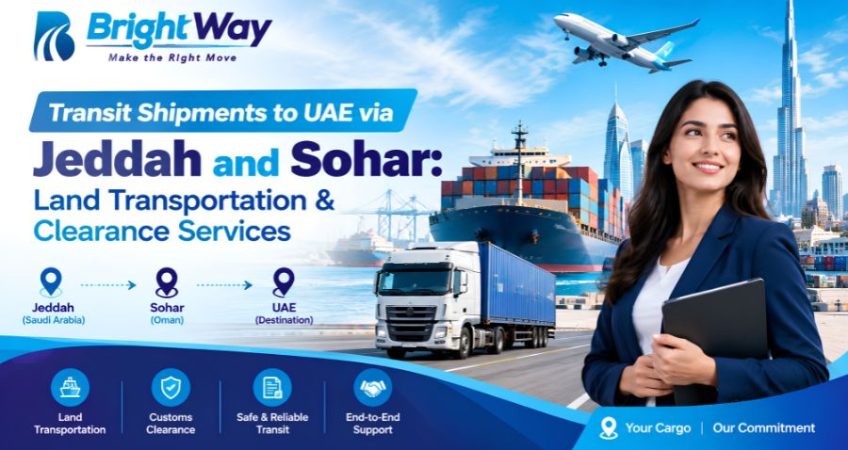
Businesses can move cargo to the UAE through Jeddah and Sohar using Brightway’s trusted land transportation services. We offer complete transit solutions, including port clearance and secure delivery. By making us your land transport partner, you can move goods to the Emirates without regional disruptions.
Using Jeddah and Sohar routes provides flexibility, faster customs clearance, and reduced dependency on traditional sea routes. These transit corridors are especially useful during regional disruptions, helping businesses maintain stable supply chains.
Currently, the Middle East logistics market is changing, and businesses are looking for smarter and more trusted shipping solutions. Delays, route disruptions, and rising costs are affecting traditional routes, and these problems have made them less reliable.
Using ports in Jeddah and Sohar is a smart move, as they offer an easier way to move goods into the UAE using land freight services in UAE. With the right support from experts like Brightway, companies can simplify their supply chain and avoid unnecessary delays. We help you with clearing customs at these ports and delivering goods to the final destination in the UAE.



Transit Shipments to UAE via Jeddah & Sohar – Route Comparison
| Route | Mode of Transport | Key Benefit | Transit Time | Best For | Risk Without Transit |
|---|---|---|---|---|---|
| Jeddah → UAE | Sea + Land (Saudi Corridor) | Alternative to sea congestion, flexible routing | 4–6 days | FMCG, industrial cargo | Port delays, route disruption |
| Sohar → UAE | Sea + Land (Oman Corridor) | Fast access to UAE (short distance) | 1–2 days | Urgent shipments, e-commerce | Delivery delays, higher cost |
| Direct Sea (Traditional) | Sea Only | Bulk shipping | 5–10 days | Heavy cargo | Port congestion, delays |
| Air Freight | Air + Land | Fastest delivery | 1–2 days | High-value cargo | High cost |
| Land Freight (GCC) | Road Transport | Flexible & cost-effective | 2–5 days | Regional distribution | Border delays |
Shipping via sea remains the most cost-effective option for bulk cargo moving through Jeddah or Sohar, while combining sea transit with onward land transportation gives businesses the flexibility to reach any point in the UAE without relying solely on Jebel Ali.
Complete Transit Solution Under One Roof
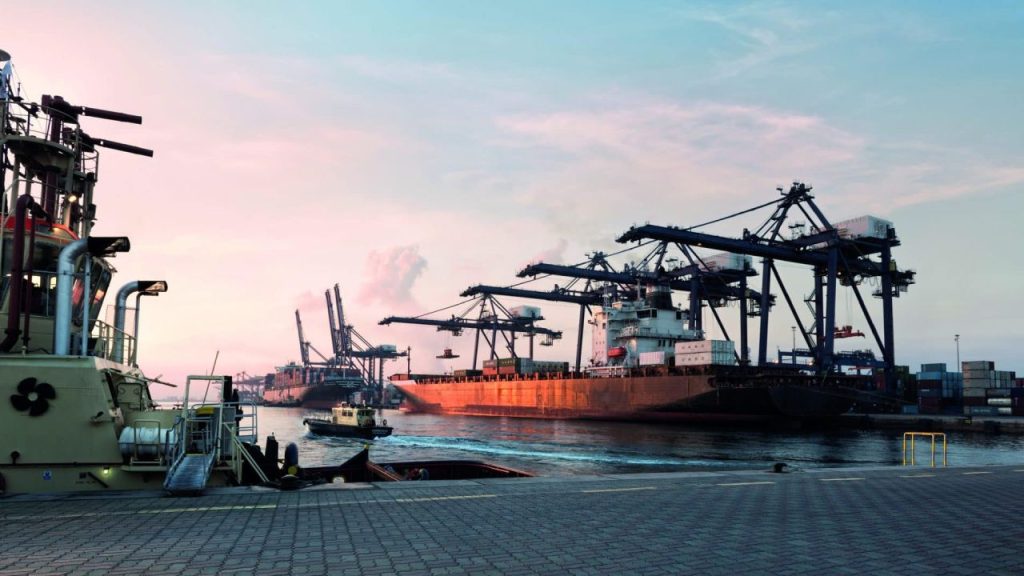
Bright Way Logistic Services LLC offers complete land shipping services. So, all your shipping worries end when you choose us for your logistics needs. We manage your goods from port clearance to final delivery to ensure smooth cargo movement.
1. Port Clearance Services
We handle efficient customs clearance at:
- Jeddah Port (Saudi Arabia)
- Sohar Port (Oman)
Our experienced team ensures:
- Accurate documentation
- Compliance with local regulations
- Faster cargo release
2. Land Transportation to UAE
Once cleared, we arrange secure and timely land transportation into the UAE.
We provide:
- All types of trucks (flatbed, curtain-side, lowbed, reefer)
- Cross-border expertise across the GCC
- Reliable transit movement with tracking
Why Choose Transit via Jeddah and Sohar?
Using Jeddah and Sohar ports is the best way to move your cargo to the UAE quickly and easily. These routes offer fast and stable options, and with our customs clearance services, you can avoid delays and benefit from faster shipping.
1. Flexibility During Regional Tensions
Due to the current safety fears and unstable conditions in the Middle East, Bright Way Logistic Services LLC is using different ports to keep your cargo safer and avoid delays.
2. Faster Turnaround
With us, you benefit from fast customs and immediate trucking. We prepare the required paperwork in advance to reduce overall transit time.
3. Cost Optimization
We help you switch to better shipping routes that help you save money on shipping and avoid changing sea freight prices or penalty fees.
Ideal Cargo for This Route
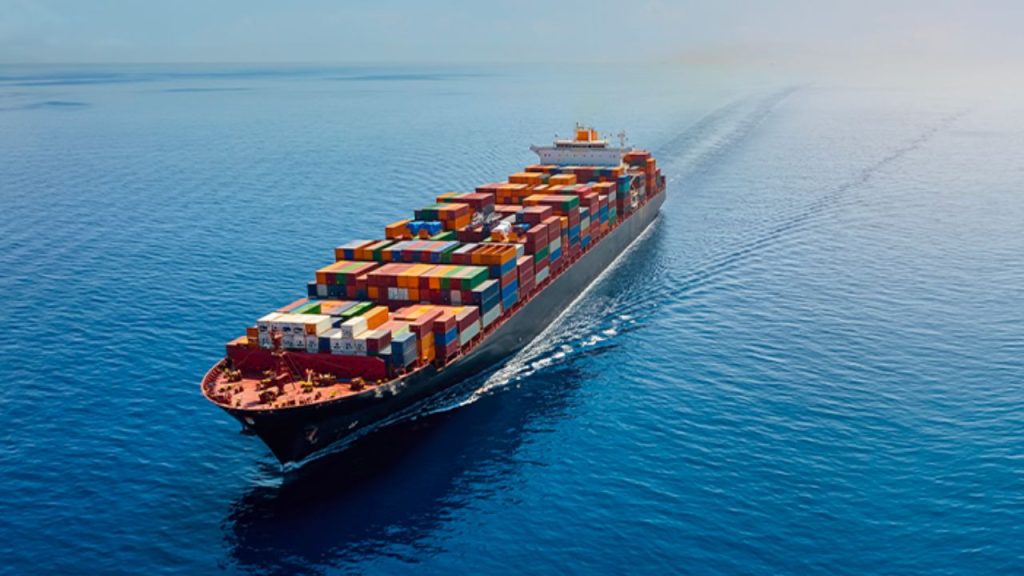
Out of Gauge Freight Forwarding to Sohar Port
For oversized machinery, industrial equipment, and project cargo that can’t be containerized, Brightway provides specialized out of gauge freight forwarding to Sohar port, managing route surveys, permits, and multi-axle trailer coordination for safe cross-border delivery into the UAE.
Why Choose Bright Way Logistic Services LLC?

If you don’t want to face any hurdles when moving your shipments to the UAE through Jeddah and Sohar, you must choose the right partner. Bright Way offers trusted land freight services in UAE and helps you easily handle complex transit movements.
- Complete coordination from port to final delivery
- Good understanding of Saudi and Oman transit rules
- Fast and smooth cross-border land freight services in UAE
- Customized logistics solutions based on client needs
What Our Clients Say


Transit Cargo from China to UAE via Sohar
Sohar Port serves as a strategic gateway for cargo moving from China to the UAE. Our team manages transportation, customs procedures, and final delivery, ensuring a smooth and efficient transit process across the UAE and GCC.
Transit Cargo from India to UAE via Sohar
For businesses importing goods from India, Sohar offers a reliable transit route into the UAE. We provide end-to-end logistics support, including cargo handling, customs clearance, and onward transportation to your destination.
Transit Cargo from Europe to UAE via Jeddah
Jeddah is a key transit hub for European shipments entering the UAE and wider GCC region. Our logistics specialists coordinate customs formalities and transportation to ensure timely and cost-effective cargo movement.
GCC Transit Cargo Solutions
We offer comprehensive transit cargo solutions for businesses moving goods across GCC countries. From commercial shipments to project cargo, our experienced team ensures secure, compliant, and efficient transportation throughout the region.
Bonded Transportation Services UAE
Our bonded transportation services enable cargo to move seamlessly between ports, free zones, warehouses, and project sites under customs supervision. We ensure full compliance while minimizing delays and operational disruptions.
Khorfakkan vs Sohar vs Jeddah — Which Route Is Right for Your Cargo?
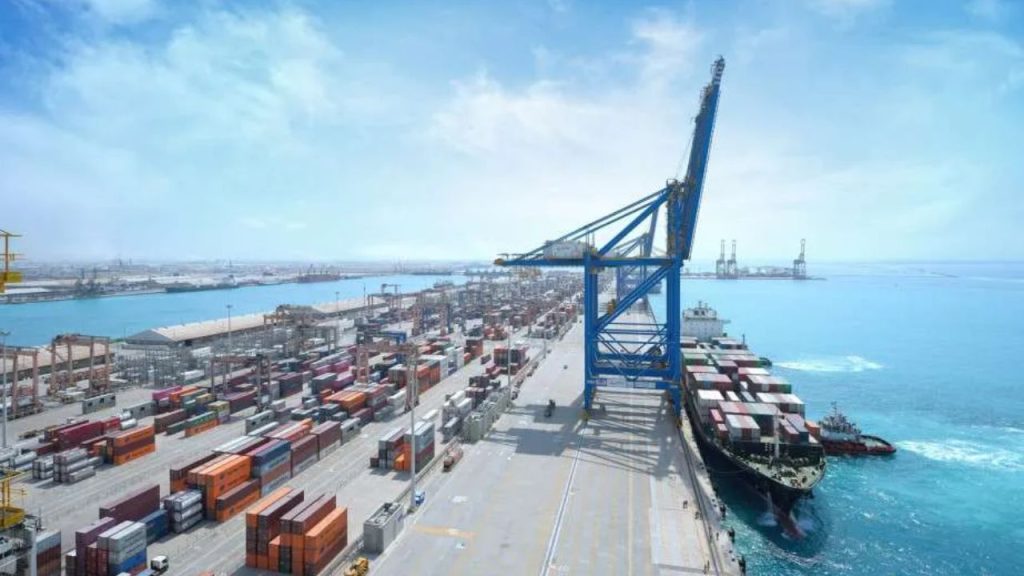
With the Strait of Hormuz disrupted, three ports have become the backbone of UAE-bound trade: Businesses evaluating Jeddah to Sohar routing as part of a multi-leg GCC transit — rather than a single fixed port — get more flexibility when congestion hits one corridor.
Khorfakkan (UAE): Located on the Gulf of Oman side, inside the UAE itself — so there’s no Hormuz transit at all. It’s the best fit for cargo destined for Dubai, Abu Dhabi, or Sharjah, since the inland leg is the shortest of the three: same country, direct trucking straight through. Terminal handling is standard UAE customs, with no special truck restrictions. It’s currently the primary reroute for most major container lines (MSC, CMA CGM) avoiding Hormuz, and documentation complexity is low since the move is treated as domestic.
Sohar (Oman): Also on the Gulf of Oman side, so it likewise avoids Hormuz entirely. It suits cargo destined for northern UAE, Al Ain, or the Fujairah border zones. The inland leg to the UAE is short — typically 2-4 hours by road via the UAE-Oman border crossings (Hafeet/Wajajah). One key operational detail: only local Omani trucks are permitted inside the terminal, so non-Omani hauliers need to transload. Right now it functions mainly as overflow or an alternative when Khorfakkan is congested, and its capacity is growing. Documentation complexity is medium, since a cross-border Oman-UAE permit is required.
Jeddah (Saudi Arabia): On the Red Sea side, with no Gulf or Hormuz exposure. It’s the right choice for cargo entering via Europe, Africa, or Red Sea lanes, or when a Saudi-first customs path is needed. The inland leg is the longest of the three — full cross-Saudi trucking to the UAE border, typically taking 2-3 days. It requires a Saudi customs transit permit (TIR/Carnet) before cross-border movement. It’s preferred for cargo already routed via the Red Sea/Suez, or for split shipments that need a Saudi leg regardless. Documentation complexity is the highest of the three, since it involves Saudi customs, a transit bond, and UAE import clearance in sequence.
The practical takeaway: if your cargo is already moving through the Gulf of Oman corridor, Khorfakkan is almost always the fastest and cheapest path into the UAE — it avoids an international border entirely. Sohar is the right call when Khorfakkan capacity is tight or your final destination sits closer to the Oman-UAE border. Jeddah only makes sense if your cargo is arriving via the Red Sea to begin with (from Europe, East Africa, or a rerouted Asia service) — using it as a first-choice UAE gateway when your cargo isn’t already headed that way adds an unnecessary 2-3 day trucking leg and a second country’s customs process.
Where most shipments run into trouble isn’t the port choice itself — it’s the paperwork gap between countries. A container that clears Jeddah cleanly can still sit for days at the Saudi-UAE border if the transit bond, HS codes, or consignee details don’t match across both customs systems.
Shipping Between Jeddah and Sohar: Inter-Port Route Options
Businesses occasionally need to move cargo directly between Jeddah and Sohar — for example, redistributing stock between Saudi Arabia and Oman, or repositioning containers ahead of a UAE-bound leg. This Sohar to Jeddah (or Jeddah to Sohar) movement can be done either via sea (coastal shipping around the Arabian Peninsula) or via land, crossing through Saudi Arabia, UAE, and Oman border points.
- Via Sea: Typically 4–7 days, depending on vessel schedules and port congestion at either end.
- Via Land: Longer transit (5–8 days), passing through multiple border crossings and requiring transit permits for each country en route.
Brightway Logistics coordinates both options, managing customs documentation across Saudi, UAE, and Omani checkpoints so your cargo moves smoothly whichever direction you’re shipping — Jeddah to Sohar or Sohar to Jeddah.
The Hormuz Strait Disruption — Timeline and What It Means for Your Shipment
If you’re shipping into or out of the UAE right now, you’re operating in a genuinely different landscape than a year ago — and it helps to understand exactly why.
What happened: Since late February 2026, the Strait of Hormuz — the single chokepoint nearly all Gulf-bound container traffic used to pass through — has been effectively closed to routine commercial shipping following the escalation in regional tensions. For decades, cargo bound for Jebel Ali moved through Hormuz on predictable schedules. That route is no longer the default.
What changed operationally:
- Major carriers (Maersk, MSC, CMA CGM, Hapag-Lloyd) suspended direct Hormuz transits and shifted to landbridge routing via Khorfakkan, Salalah, Sohar, and Jeddah.
- War risk insurance surcharges were applied across nearly all Gulf-bound cargo categories.
- Fuel surcharges and a new Transit Disruption Surcharge (TDS) were introduced by major lines to cover rerouting costs.
- Effective fleet capacity on Gulf routes tightened, since vessels avoiding Hormuz take longer routes and turn around less often — meaning space on well-routed vessels fills up faster than before.
What this means for your business, practically:
- Lead times have shifted. Cargo that once reached Jebel Ali in a predictable window now typically involves an extra leg — transshipment plus inland trucking — adding real days, not hours.
- Freight rates are structurally higher, not just temporarily spiking — the surcharges above are being renewed, not phased out, as the disruption continues.
- Booking earlier matters more than it used to. With less flexible capacity, last-minute bookings on the best-routed vessels are getting harder to secure.
- Route choice is now a cost decision, not just a logistics one. Khorfakkan, Sohar, and Jeddah each carry different cost and time trade-offs (see comparison above) — picking the wrong one on a time-sensitive shipment can be expensive.
The businesses managing this best are the ones that stopped planning around pre-2026 assumptions — they’ve locked in alternative routing early, built in buffer time, and work with a forwarder who can shift port choice and mode (sea, land, or sea-air) depending on what’s actually moving that week, not what moved last quarter.
This is exactly the kind of moving-target situation where a fixed shipping plan breaks down fast — and where having a forwarder actively managing the Jeddah-Sohar-UAE corridor day to day, rather than following a static route, makes the difference between a delayed container and one that clears on schedule.
Move Your Cargo Faster Across GCC
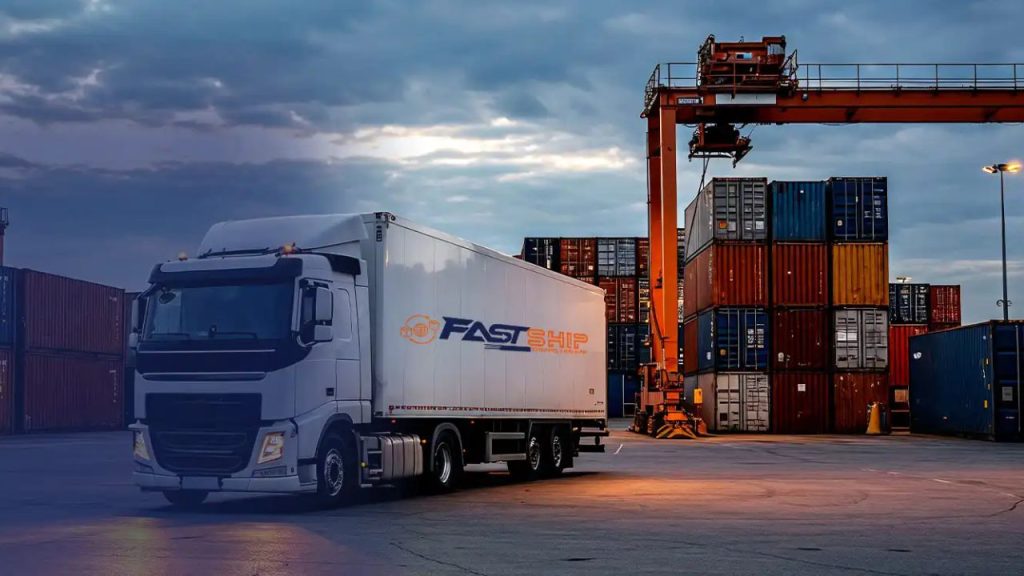
Don’t let complex customs delays slow your shipments’ delivery. Trust Bright Way Logistics Services LLC to handle your cargo through Jeddah or Sohar with 24/7 support and expert clearance solutions.
Conclusion
With current shipping risks, using ports in Jeddah and Sohar is a smart backup plan for businesses to move their goods into the UAE. Despite the regional issues, these ports in Saudi Arabia and Oman provide a secure way to get goods into the Emirates.
With our expert customs clearance services, businesses can ensure uninterrupted cargo movement across the GCC. Make Bright Way Logistics your trusted partner to avoid shipping delays, as we connect you to stable alternatives to disrupted routes.
Also Read:
Transport and Logistics Company in UAE
LTL Services to Bahrain – Affordable Door-to-Door Cargo from UAE & Saudi
Ultimate Guide to the Export Process from Jebel Ali Port Dubai
People also ask
Why use Jeddah and Sohar for UAE transit shipments?
Jeddah and Sohar are strategic logistics hubs that offer faster customs processing, reduced shipping time, and flexible land transportation options to the UAE.
What is the process for transit cargo to UAE?
The process includes cargo arrival at Jeddah or Sohar port, customs clearance, transit documentation, cross-border land transportation, and final delivery in the UAE.
What documents are required for transit shipments to UAE?
Key documents include commercial invoice, packing list, bill of lading, transit permit, and customs clearance documents for both origin and destination.
How long does transit shipping to UAE take via Jeddah or Sohar?
Transit time depends on cargo type and route but is generally faster than direct shipping, especially when combined with efficient land transportation services.
What are the benefits of land transportation for transit cargo?
Land transportation offers flexibility, faster delivery, lower costs, and better control over shipment movement compared to traditional shipping routes.
Are transit shipments to UAE safe and compliant?
Yes, when handled by experienced logistics providers, transit shipments follow strict customs regulations and safety standards to ensure secure and compliant delivery.