
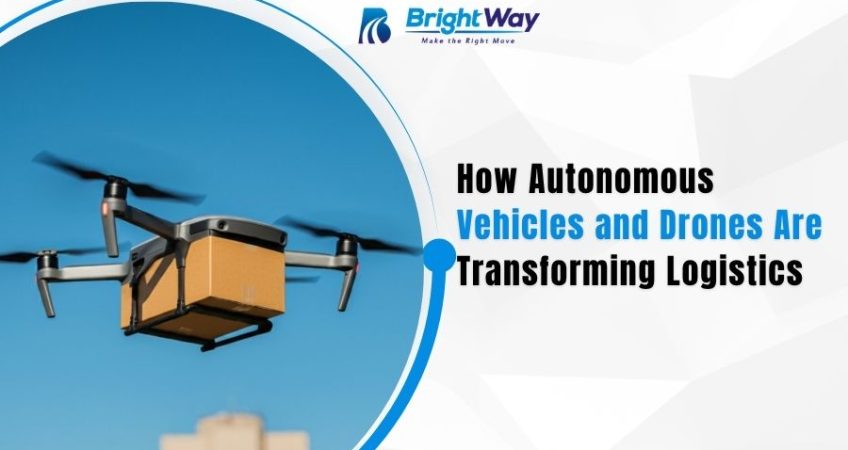
Autonomous vehicles (AVs) and delivery drones are no longer science fiction or isolated lab experiments. They have quietly slipped into our working infrastructure. Powered by AI, LiDAR, and advanced sensor fusion, these systems are finally delivering on a promise the logistics industry has chased for decades: transportation that is safer, cheaper to run, and completely untethered from a time clock.



Self-Driving Trucks Are Already Hauling Real Freight
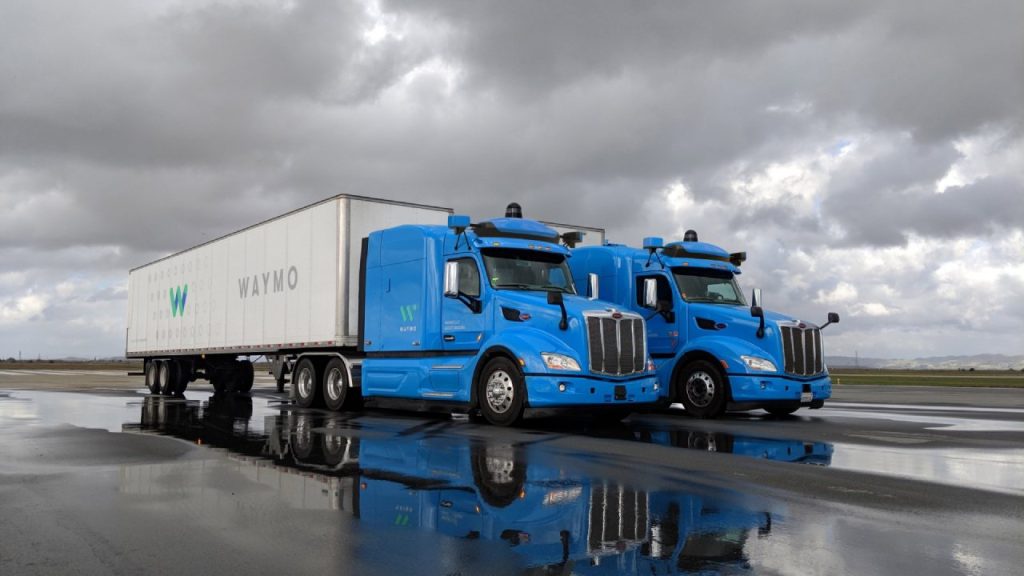
Long-haul trucking was once the part of the supply chain people assumed would be the hardest to automate. That assumption is officially dead. Driverless Class 8 trucks are now moving commercial freight on public highways without a safety driver on board—not as an experimental pilot, but as a paid, scheduled service.
- Aurora Innovation has logged over 250,000 driverless miles across commercial routes with zero attributed collisions. Crucially, they’ve scaled their network to lanes that exceed the distance a human driver could legally cover in a single shift under federal hours-of-service rules.
- Kodiak Robotics took a different tactical path, deploying the largest fleet of driverless trucks in the Permian Basin for energy logistics while preparing for a major highway long-haul launch.
- Gatik has quietly dominated the “middle mile,” focusing on fixed, repeatable routes for retail replenishment and clocking tens of thousands of driverless deliveries.
The common thread here is operational efficiency. These trucks don’t get tired, don’t need federally mandated rest breaks, and don’t care if it’s 3:00 AM. They take a asset that historically sat idle for half the day and turn it into a 24-hour revenue engine.
Drones Are Solving the Last Mile—and the Hardest Mile
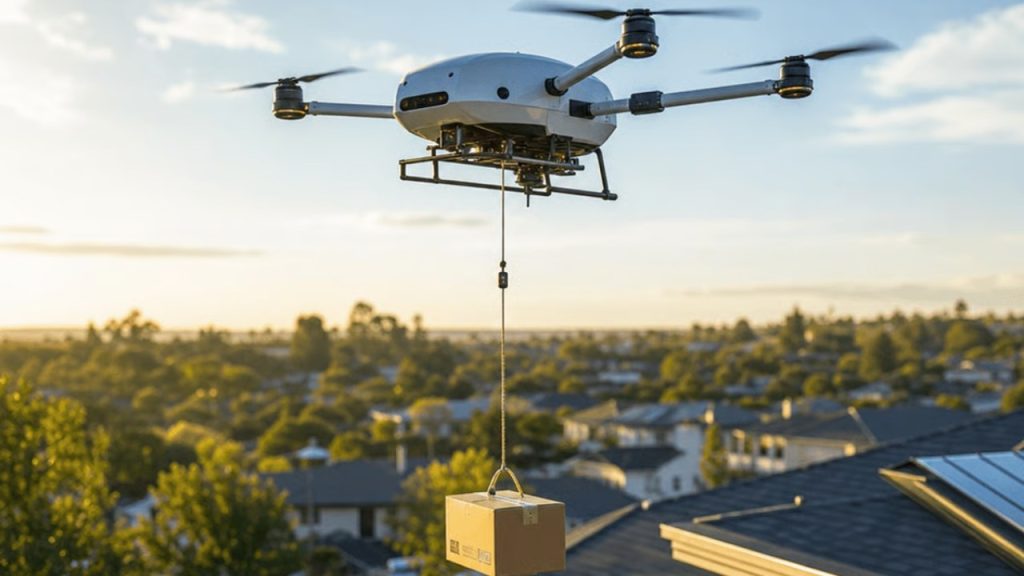
While autonomous trucks rewrite the economics of long-haul corridors, drones are tackling the last mile—specifically, the segments that give traditional delivery vans logistical nightmares: rural clinics, gridlocked city centers, and disaster zones where every minute counts.
- Zipline has completed millions of cumulative deliveries globally. The bulk of their cargo is medical—blood, vaccines, and emergency supplies flown directly to locations that road vehicles simply couldn’t reach in time.
- Wing (Alphabet’s drone arm) has expanded its retail partnerships into hundreds of store locations, while Amazon’s Prime Air is moving past isolated test markets into multi-city commercial service.
Industry trackers estimate the global drone delivery market is approaching $4 billion this year, growing at an impressive 35-40% annually. This acceleration is happening because regulators are finally formalizing the rules for routine beyond-visual-line-of-sight (BVLOS) flights. For time-sensitive cargo, drones don’t just beat the competition—they bypass traffic entirely.
The New Competitive Landscape
What separates this moment from previous waves of tech hype is the caliber of players involved. This is no longer just a playground for venture-backed robotics startups; the traditional heavyweights who move the world’s freight are locking in their positions.
| Player | Strategy & Focus |
| FedEx, UPS, & DHL | Acting as both massive launch customers and direct investors. UPS Flight Forward focuses heavily on healthcare and campus deliveries, while DHL is testing cargo drones for industrial sites. |
| Amazon | Vertically integrating the entire ecosystem—from fulfillment centers and proprietary drone hardware to custom airspace management. |
| Walmart | Partnering directly with operators like Wing to instantly add last-mile aerial capability without the overhead of building it from scratch. |
| Industrial Operators | Companies like Atlas Energy Solutions are deploying some of the first at-scale driverless truck fleets in controlled environments, proving the tech before it hits the open highway. |
The question for enterprise shippers has shifted. It’s no longer “Should we automate?” It’s “Who is going to lock down the best routes, regulatory approvals, and infrastructure first?”
Why This Matters: The Big Three
1. Safety
Removing driver fatigue, distraction, and human error is the single most effective lever we have to reduce highway accidents involving heavy trucks. Similarly, drone operators are maintaining excellent safety records via redundant motors, backup batteries, and automated abort protocols.
2. Cost
Machines excel at consistency. Optimized, steady speeds reduce fuel burn. Eliminating empty-truck hours squeezes the waste out of idle capacity, and lower accident rates will ultimately drive down insurance and liability costs.
3. 24/7 Availability
A supply chain that doesn’t sleep flattens out traditional bottlenecks. Shipping windows that used to take days are being compressed into hours simply by utilizing the middle of the night.
The Roadblocks Left to Clear
The trajectory is clear, but the path isn’t entirely frictionless. Regulators are still drafting the permanent rulebooks for routine driverless highway operations and complex drone flights. Furthermore, the physical infrastructure—charging networks, dedicated lanes, vertiports, and digital air traffic control—is being built in parallel with the technology, not ahead of it. Public trust also remains a fragile currency, earned incident by incident, where high-profile mistakes receive outsized scrutiny regardless of favorable safety trends.
None of this stops the momentum; it simply dictates the speed of adoption.
What This Means for Shippers in the UAE and GCC

While much of the bleeding-edge testing is concentrated in the US due to its long highway corridors and early regulatory exemptions, the GCC is moving on its own aggressive timeline. Regional shifts toward smart cities and tech-forward infrastructure mean expectations are changing rapidly. Shippers everywhere are beginning to demand the level of visibility, reliability, and compressed transit times that automation promises.
Closing that gap right now requires a partner who understands where the technology is going, but knows how to execute today.
At Brightway Logistics, we already run the disciplined, tech-enabled playbook that this automated future is being built on. We manage tracked, seamless freight movement across land, air, and sea throughout the UAE and GCC—backed by robust customs clearance, strategic warehousing, and 3PL support.
As autonomous trucks and drones mature into mainstream infrastructure over the next decade, the logistics providers who win won’t just be the ones with the newest gadgets. They will be the ones who already run flawless, highly visible operations today, ready to layer tomorrow’s technology onto a foundation that already works.
Also Read:
outsourced logistics provider UAE | 3PL warehousing and fulfillment UAE
Brightway Logistics | trusted logistics company in UAE
Customs brokerage services Dubai | UAE customs documentation support