
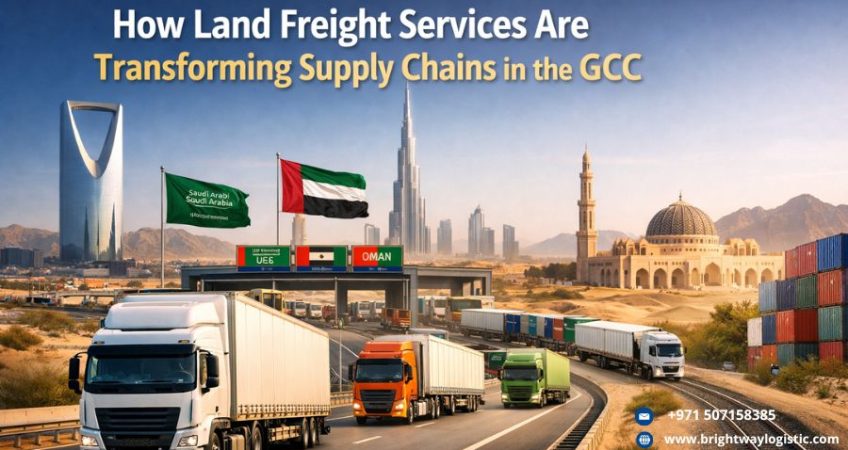
The Gulf Cooperation Council (GCC) has transformed from an oil-dependent region to a global logistics powerhouse in the quickly evolving economic landscape of 2026. Large seaports and top-notch airports frequently make headlines, but the land freight services GCC serves as the silent, vital backbone of the region’s economy.
The ability to move goods across borders effectively is now essential for businesses operating in the United Arab Emirates, Saudi Arabia, Oman, Qatar, Kuwait, and Bahrain. Digital customs platforms, significant infrastructure investments, and the emergence of specialized logistics companies like Bright Way Logistic Services LLC are driving the transformation of supply chain logistics in the Gulf Cooperation Council.
- How Land Freight Services Are Transforming Supply Chains in GCC
- Why Land Transport Services UAE Are the Preferred Choice
- The Impact of Digitalization and Real-Time Tracking on GCC Logistics
- The Role of Bright Way Logistic Services LLC in GCC Logistics
- Future Trends – Green Logistics and Autonomous Trucking
How Land Freight Services Are Transforming Supply Chains in GCC
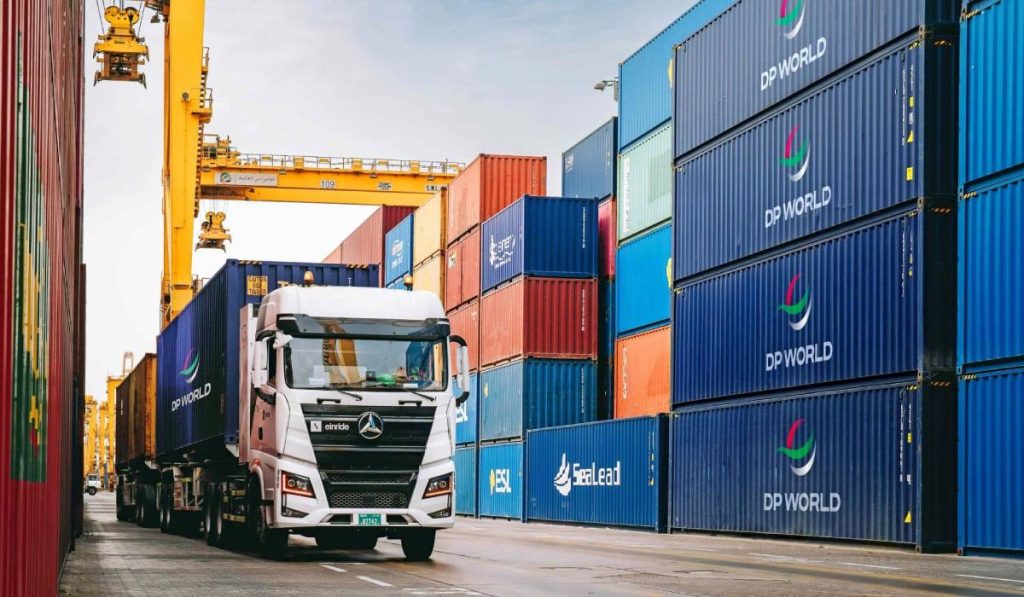
Land transportation’s function has evolved from straightforward “trucking” to a complex, data-driven part of the integrated supply chain. This shift is being driven by a number of important factors in 2026 –
1. Smooth Cross-Border Communication
The days of trucks sitting at borders for days because of paperwork delays are long gone. The GCC now has “Single Window” customs procedures in place. Before the truck even reaches the border, freight forwarding GCC experts can electronically clear cargo thanks to this digital integration. Transit times have decreased as a result; for example, a shipment from Dubai to Riyadh can now be finished in less than 24 hours, including all formalities.
2. The Rise of Multimodal Hubs
Land freight is no longer a stand-alone service. It is currently a component of a “Multimodal” approach. Large inland dry ports are now directly connected to major ports like King Abdulaziz Port in Saudi Arabia and Jebel Ali in the United Arab Emirates, thanks to sophisticated road networks. This guarantees that cargo arriving by sea is promptly moved to land transport services UAE for quick distribution to the “last mile.”
3. Specialized Cargo Handling
The contemporary GCC supply chain operates more than just dry goods. There is a huge wave in demand for –
- Cold Chain Logistics – Crucial for food protection and pharmaceuticals.
- Oversized Project Cargo – Supporting “Giga-projects” like NEOM and the growth of Abu Dhabi’s infrastructure.
- E-commerce Distribution – Taking advantage of the “instant delivery” culture that has taken over the Middle Eastern retail market.
Why Land Transport Services UAE Are the Preferred Choice
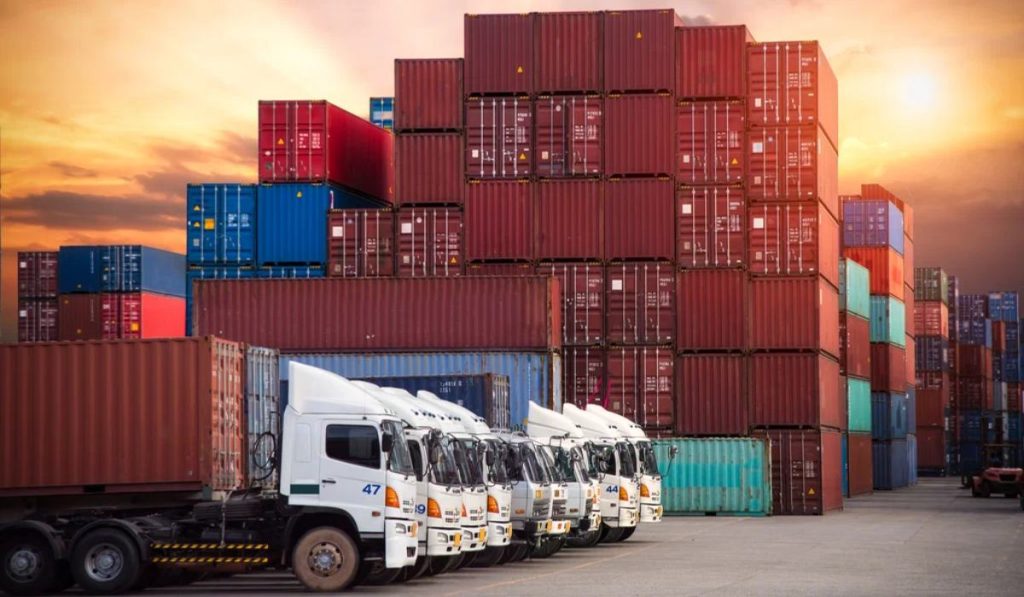
While air freight is quick and sea freight is high-volume, land transport services UAE deliver a remarkable “middle ground” that delivers the finest of both worlds: scalability and affordability.
1. Flexibility and Door-to-Door Delivery
The ability of land freight to offer genuine door-to-door service is its biggest benefit. A truck can be loaded at a factory in Sharjah and unloaded straight at a warehouse in Muscat, in contrast to air or sea, where goods must be handled several times at terminals. For delicate or expensive items, fewer “touchpoints” translates into a much lower risk of damage.
2. Cost-Effectiveness in Regional Trade
Land freight is frequently more dependable than sea freight, which is susceptible to port congestion, and is substantially less expensive than air freight for shipments within a 2,000-kilometer radius. AI-optimized routing and “Fuel-Efficient Fleet Management” have further reduced the cost per kilometer for GCC companies in 2026.
The Impact of Digitalization and Real-Time Tracking on GCC Logistics

Previously, logistics was a “black hole” where the time lost between a truck leaving the warehouse and the time it reaches the customer was the main concern. However, by 2026, the digital transformation of supply chain logistics GCC has made it possible for companies to use their data to their advantage instead of being in the dark. It is no longer a matter of guessing the location of the stock; one can simply check its position through the system in real-time.
1. IoT and Smart Monitoring
The modern logistics companies, led by the likes of Bright Way Logistic Services LLC, have completely integrated Internet of Things (IoT) sensors into all their trucks and other vehicles. These high-tech devices not only keep track of the location through GPS but are also capable of analysing the state of the load. For instance, “Cold Chain” integrity is critical in the UAE and Saudi Arabia’s desert scorching heat. Smart sensors notify the driver and the head office instantly when there is a change in the temperature of a refrigerated trailer, even by a very small amount, thus averting the expensive loss of food or medicine.
2. AI-Powered Route Optimization
Artificial Intelligence is making a significant impact on the land freight services GCC. AI-based algorithms are already employed to evaluate the previous traffic data, the time taken to wait at borders, and even the weather conditions to determine the most efficient routes. By minimizing the use of big routes like the King Fahd Causeway or the Ghuwaifat border, which are usually heavily congested, transport companies are able to cut down their fuel and carbon emissions. This, in turn, not only accelerates the delivery process but also aids the companies in achieving their sustainability targets, which have already become a primary focus of government-led initiatives in the Emirates and Saudi Arabia.
3. Improved Customer Transparency
The end customer will experience a better service due to this process of digitalization. Digitized Proof of Delivery (ePOD) can be accessed by the companies through integrated portals, automated status updates can be viewed, and instant notifications can be received upon successful transit. This degree of transparency fosters trust and enables the companies to control their stock levels with much greater accuracy, thus lessening the need for costly “safety stock” in their warehouses.
The Role of Bright Way Logistic Services LLC in GCC Logistics

In this high-pressure environment, Bright Way Logistic Services LLC has emerged as a leader by concentrating on “Zero-Hassle” logistics. They have successfully filled the gap between complicated regional rules and the business requirement for speed.
1. Expertise in SABER and Saudi Trade
One of the biggest difficulties in freight forwarding GCC is the particular need for the Saudi market, such as the SABER certification. Bright Way Logistic Services LLC has expertise in these technicalities, making sure that UAE-based exporters can enter the Saudi market without facing regulatory restrictions.
2. Modern Fleet and Technology
Bright Way uses a broad fleet ranging from 3-ton pickups to heavy-duty low-bed trailers. Their usage of real-time GPS tracking and IoT sensors permits customers to supervise their cargo’s temperature and location every second of the journey. This level of clarity is what contemporary supply chain logistics GCC demands.
3. Comprehensive 3PL Solutions
Beyond just moving trucks, Bright Way delivers Third-Party Logistics (3PL) that include –
- Warehousing – Safe storage in strategic UAE locations.
- Customs Brokerage – Managing all the legal documentation for GCC transit.
- Last-Mile Delivery – Making sure the goods reach the final client’s doorstep.
Future Trends – Green Logistics and Autonomous Trucking
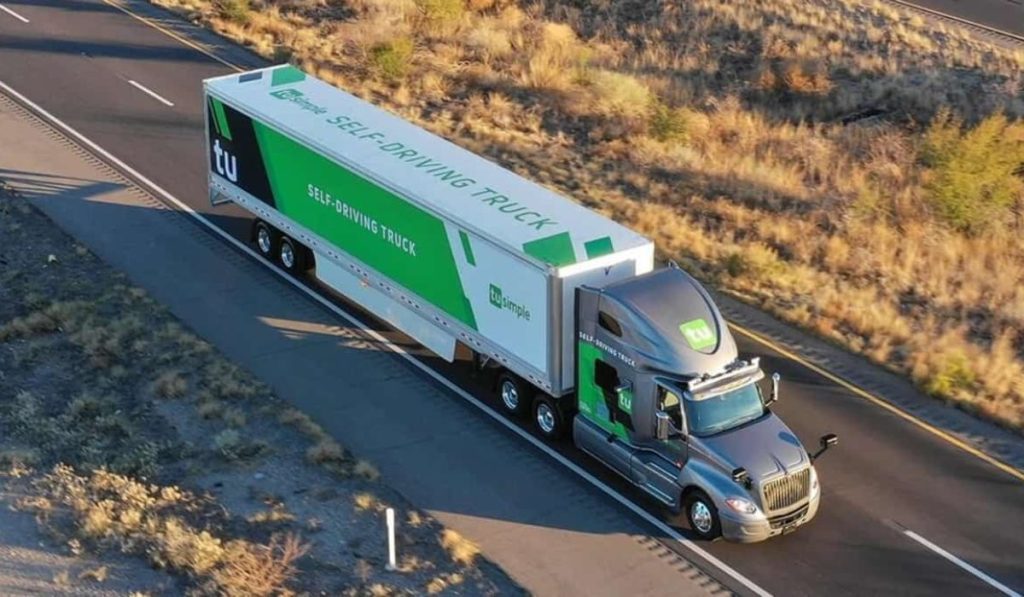
The GCC land freight sector looks forward to 2026 and beyond by embracing sustainability.
1. Electric Trucks – Heavy-duty electric trucks’ charging stations are available now in several logistics corridors across the UAE.
2. Smart Borders – The use of AI-based scanners is being explored for cargo inspection at border points, where trucks would not have to stop at all.
3. The Gulf Railway – Air freight will continue to be the preferred mode of transport, but the development of the rail network connecting all six GCC countries will soon create a high-speed “Land-Bridge” across the entire peninsula, making land transportation very fast.
Conclusion
The handling of logistics and supply chains in the GCC has been largely influenced by the vision of the region to move away from oil dependency. The merging of technology with the world-class road network made land freight transportation the main artery of trade in the region. It is the partnership with a reputable company like Bright Way Logistic Services LLC that gives the businesses the chance to connect with this complicated yet lucrative market easily and make logistics a source of competitive advantage rather than a challenge.