
During the 2026 Strait of Hormuz crisis, the UAE executed huge trade rerouting, diverting thousands of regular trucks from closed Gulf ports to the eastern coast of the United Arab Emirates. As a result, corporations are rapidly scaling to using importer of record services in Dubai and Fujairah to lawfully handle border adherence, customs, and taxes for overland cargo reroutes.
International companies trading with the Gulf Cooperation Council are facing delayed shipments, sky-high war-risk insurance premiums, and legal gridlocks in the region as regular maritime lanes are frozen. However, the UAE local markets can’t afford a total halt, even with the shipping crisis 2026. To sidestep the Strait of Hormuz shipping disruption, companies are forced to abandon conventional logistics routes and move to complicated overland corridors, cross-border multimodal networks, and airfreight options. In this high-stakes environment, deploying IOR services UAE 2026 has changed from a regular company compliance practice into a main survival strategy.
A specialized importer of record UAE works as the legal anchor that permits cargo routed through optional entry points to clear customs smoothly, protecting international brands from crippling supply chain failures.
- What is the Strait of Hormuz Crisis 2026?
- How IOR Services Are Keeping UAE Businesses Running
- Why You Need an IOR Partner Right Now
- Navigating the UAE Shipping Crisis: 5 Ways to Protect Your Business
- How Brightway Logistics Can Help
- The East-West Pipeline Shutdown: Why Your Backup Plan Needs a Backup
- What Rerouting Actually Costs You
- Sanctions, Insurance, and Navigation Risks to Watch
What is the Strait of Hormuz Crisis 2026?
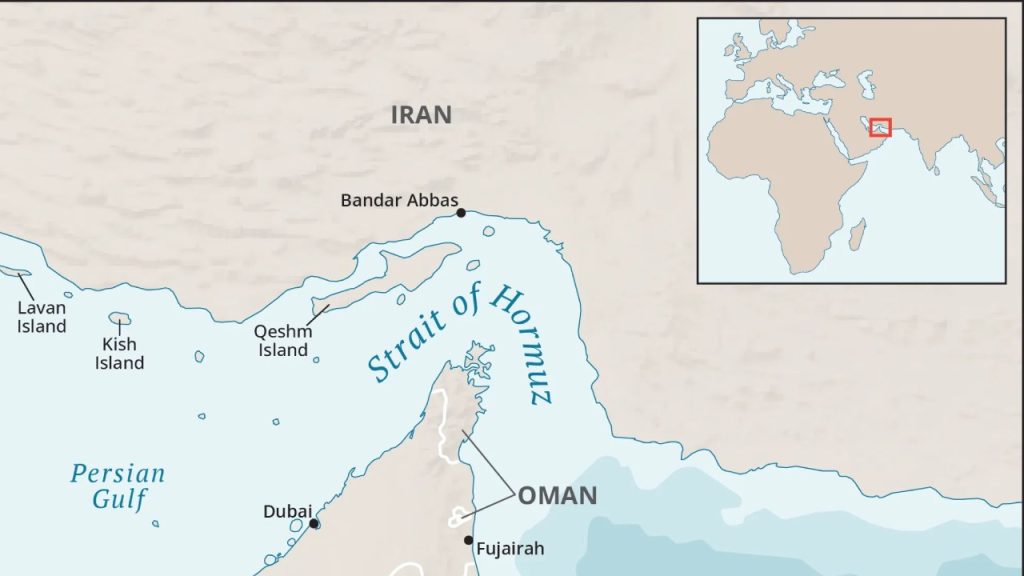
The Strait of Hormuz Crisis 2026 began when local conflicts transformed into a main blockade, cutting off access to the waterway. The Strait of Hormuz is a small but crucial body of water that links the Arabian Gulf to the open ocean. It is one of the most crucial shipping lanes in the world because almost 20% of the world’s oil, gas, and regular commercial goods pass through it.
UAE shipping crisis 2026 has pushed freight rates UAE 2026 sharply higher across every mode of transport.
1. No Ship Insurance – Shipping insurance corporations have refused to cover vessels that enter the inner Gulf. Without insurance, cargo ships refuse to sail into UAE waters.
2. Supply Blockages – Most of the food, building materials, and factory areas for the Gulf region pass through this water. The blockage has put these supplies at risk.
3. The Need for New Routes – Since ships can’t sail into the Gulf, they should drop off cargo at ports outside the blockade zone and move the goods into the United Arab Emirates utilizing trucks.
For companies trying to import electronics, medical tools, or retail products, the old way of shipping is broken. Cargo should now move through UAE cross border logistics, crossing land borders to reach its final destination.



How IOR Services Are Keeping UAE Businesses Running
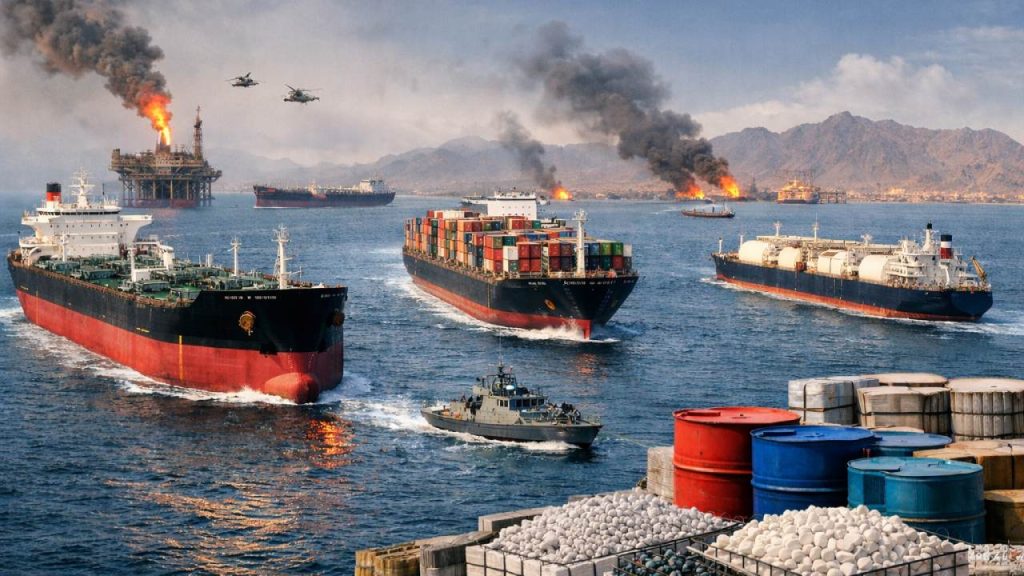
When you alter your shipping ways overnight, customs rules get much more difficult to handle. In fact, border protection is tighter than ever during a crisis. This is why you require an importer of record UAE Hormuz crisis professional, to handle the documentation for you.
An importer of record is a lawfully registered local corporation that takes complete duty for your imported goods. The IOR manages three major tasks: they make sure the cargo follows local rules, they pay all the customs taxes and duties, and they file the official documentation.
During the IOR services GCC Hormuz blockade, an expert IOR keeps your supply chain moving in three easy steps –
1. Easy Land Customs Clearance – When ships drop off your goods in neighboring nations like Oman, the cargo has to end its trip on trucks. Crossing land boundaries means negotiating with new customs checkpoints. A seasoned IOR manages these transit papers rapidly so your trucks do not get stuck at the border for weeks.
2. Keeping Up with Fast-Changing Rules – During a trade crisis, governments usually change import rules overnight. They might add emergency taxes or ban some products. A local IOR tracks these modifications in real-time, controlling your goods from being seized or fined because of old documentation.
3. No Need for a Local Legal Entity – A number of global brands don’t have an official office building or legal license inside the UAE. Typically, they depend on local shops or distributors to import goods. If those local purchasers are struggling during a crisis, a committed IOR can move in as your independent legal representative. This permits you to keep importing your goods seamlessly.
Why You Need an IOR Partner Right Now
Trying to handle cross-border shipments by yourself during a primary crisis is extremely dangerous. Depending on old ways will cause lost inventory and unhappy clients.
| The Risk of Going Alone | The Advantage of Using an IOR |
| Cargo Stuck at the Border: Shipments sent through new truck routes can be carried up indefinitely if you utilize the wrong transit methods. | Fast Entry: The IOR utilizes its pre-existing trade licenses and legal bonds to clear your cargo through customs rapidly. |
| Distributor Delays: Your local distributors might face financial trouble during a crisis, halting your whole import line. | Total Control: You stay in charge of your cargo. The IOR clears the goods independently of your end buyers. |
| Surprise Expenses: Changing routes makes hidden costs, unpredictable taxes, and costly customs delays. | Clear Costs: An expert provider tells you the precise duty costs and transport costs upfront. |
Navigating the UAE Shipping Crisis: 5 Ways to Protect Your Business
You don’t have to just sit tight and wait for the Strait of Hormuz to clear up. Smart importers and exporters are adapting right now. Here is how you can keep your supply chain moving.
1. Mix Up Your Routing
Don’t put all your eggs in one maritime basket. If direct sailings through Hormuz are restricted, start looking into alternative ports like Khor Fakkan, Fujairah, or Salalah to bypass the bottleneck.
2. Sort Your IOR Service Early
If your cargo gets rerouted through new land borders, you’re going to need fresh paperwork. Don’t wait for your goods to get stuck—partner with an Importer of Record (IOR) ahead of time to keep customs hassle-free.
3. Check Your Insurance Fine Print
Standard cargo policies often have blind spots when it comes to war-risk zones. Double-check your coverage before your freight moves, especially if you are switching between Dubai sea freight and overland GCC trucking.
4. Add a Realistic Time Buffer
Pre-crisis timelines are out the window for now. Build an extra 2 to 5 days into your delivery estimates to account for the unavoidable congestion at cross-border checkpoints.
5. Team Up With a Local Freight Forwarder
Offshore agents just can’t move fast enough right now. Working with a Dubai-based logistics partner who has boots on the ground means you get real-time routing adjustments and direct port relationships when space is tight.
How Brightway Logistics Can Help

As a seasoned transport and logistics company in UAE, Brightway Logistics understands precisely how to construct smart, backup supply chains during the 2026 shipping freeze. If your shipments are stuck or canceled because of the maritime blockade, we have a local area network and legal licenses to assist you in sidestepping the bottleneck securely.
1. Find Better Routes – Brightway Logistics looks at your present shipping programs and switches your goods from congested sea lanes to secure air freight or overland truck routes.
2. Handle the Legal Documentation – As your official importer of record, Brightway Logistics takes over all lawful duties, filing the right customs forms and protection approvals.
3. Safe Land Transport – We load your goods onto our protected truck fleet and move them within land boundaries while tracking the shipment every step of the way.
4. Final Delivery – Once the goods clear the UAE boundary, we provide them straight to your local warehouse, office, or client across the Emirates.
As a trusted freight forwarder in Dubai, Brightway Logistics combines sea freight, road freight, and customs clearance expertise to keep your supply chain moving — even during the UAE shipping crisis.
The East-West Pipeline Shutdown: Why Your Backup Plan Needs a Backup
Most importers assumed that if the Strait of Hormuz stayed closed, cargo could still move overland through Saudi Arabia’s East-West Crude Oil Pipeline corridor as a fallback. That option is now gone. The pipeline went offline on September 11, 2026 following drone strikes, and it remains shut. At the same time, the Bab el-Mandeb strait — the other major route in and out of the region — is facing its own disruption from Houthi attacks.
What this means practically: there is currently no fully open major alternate corridor into the Gulf. Every route businesses are using — Khor Fakkan, Fujairah, Salalah, overland trucking — is a partial workaround, not a guaranteed one. If your logistics plan has a single “Plan B” route, it’s time to build a Plan C and D as well, and to work with a partner who can pivot between them on short notice.
What Rerouting Actually Costs You
The blog talks about switching to overland routes, but doesn’t tell you what that switch costs — and the number matters more than most buffer-time estimates.
- Jebel Ali vs. the east coast: Jebel Ali is still technically open and processing cargo, but throughput has collapsed roughly 90% compared to a year ago, with idle cranes and stranded containers piling up in the yards.
- The truck queue reality: Cargo rerouted overland through Fujairah or Khor Fakkan is currently facing truck queues of up to 12 hours, compared to a 27-minute turnaround at Jebel Ali in normal times.
- The cost multiplier: Moving goods overland from these east-coast ports instead of sailing directly into Jebel Ali can run 4 to 5 times more expensive — a cost driven by trucking capacity constraints, port congestion fees, and the sheer volume of cargo now competing for the same limited land routes.
Before you commit to a reroute, get a landed-cost comparison — not just a transit-time estimate — from your freight partner. The delay is the visible cost. The multiplier is the one that hits your margins.
Sanctions, Insurance, and Navigation Risks to Watch
Beyond customs and routing, three risk areas are catching importers off guard:
1. Sanctions exposure on strait-related payments – A U.S. Treasury (OFAC) advisory now warns that any payment made to Iran for passage through the Strait of Hormuz — cash, crypto, in-kind transfers, even donations to Iran-linked charitable entities — can expose both U.S. and non-U.S. persons to sanctions risk. If your carrier or agent is quietly paying transit fees to keep cargo moving, that’s a liability you need visibility into.
2. GPS spoofing and jamming near Fujairah – Vessels approaching Fujairah’s anchorage and port waters have reported GPS spoofing and jamming, causing false position data and navigation errors. Since Fujairah is one of the main recommended reroute destinations, this is a live operational risk worth flagging to your shipping line, not just a customs issue.
3. Unverified attack reports – Several recent vessel-strike claims in the strait — including reports near Qeshm Island — have come from Iranian state media without independent confirmation. Treat breaking reports with caution and confirm through your carrier or insurer before adjusting routing decisions on the fly.
Conclusion
The shipping crisis of 2026 has demonstrated that supply chains can change in an instant. With the Strait of Hormuz closed, there is no longer any conventional sea shipping into the UAE. But there is no necessity to stop business. By adapting quickly, shifting to overland routes and utilizing multimodal transport networks, corporations can keep their products moving and their customers happy.
The way to survive this crisis is to obey the law locally. If you work with a dedicated Importer of Record UAE you can spare yourself the hassle of complex and quickly changing border customs. When you have a partner like Brightway Logistics, you know your cargo is classified correctly, taxes are paid, and your trucks are moving through land borders without costly delays.
Don’t wait for the sea routes to open. In these challenging times, take control of your logistics today to secure your supply chain and ensure your business stays ahead of the competition.
Also Read:
| Air Freight vs Road Freight from Dubai UAE to Saudi Arabia – Cost, Time & Best Option (2026) |
| What are the fastest courier services in UAE? |
People also ask
Just how bad is the spike in shipping costs?
t’s been a heavy hit across the board. Ocean freight rates on major routes have jumped by roughly 125% to 180%. Air freight is up about 40%, and even local road transport within the GCC is getting pricier due to border bottlenecks and rising insurance premiums.
If my cargo gets rerouted through Oman or Saudi Arabia, do I still need an Importer of Record (IOR) service?
Absolutely. Even if your cargo takes a detour and crosses into the UAE via a land border instead of arriving by sea, it still needs to clear customs legally. An IOR service handles all that paperwork and keeps everything above board, even if you don't have a registered entity in the UAE.
What’s the safest, most reliable way to get my goods into the UAE right now?
Your best bet is a multimodal approach. A lot of businesses are finding success by offloading cargo at alternative, less disrupted ports like Salalah or Khor Fakkan, and then trucking the goods overland into the UAE. It takes a bit more coordination, but it keeps your supply chain moving.
When is the Strait of Hormuz situation actually going to clear up?
Honestly? No one has a crystal ball for this one, as it entirely depends on how the broader geopolitical situation plays out. For now, the smartest move is to build extra buffer time into your schedules, keep your freight contracts as flexible as possible, and stay in close contact with your logistics partner for day-by-day updates.