

Land Freight Services in dubai: Your Trusted Link to GCC Markets
Brightway Logistics is a trusted land freight company in UAE, moving cargo by road to Saudi Arabia, Oman, Qatar, Kuwait, Bahrain, and Jordan. With 15+ years of experience and ISO 9001:2015 certification, we handle FTL, LTL, customs clearance, and real-time tracking — delivering your shipments on time across all GCC borders.
- Tailored road freight plans for every GCC destination, scaled to your shipment size
- Trusted clearing agents at all major GCC land borders
- Flexible land freight solutions for small and large shipments
- Timely delivery assurance with advanced tracking support
- Good customer service and an experienced team
Contact Our Team for Fast GCC Transport Solutions
Brightway Logistics: Trusted GCC Land Freight Support
Bright Way Logistic Services LLC remains available to the clients wherever and whenever they need our support. We support businesses of every size moving cargo across the GCC by road — from single pallets to full truckloads. With proper planning and customs support, you never need to worry about delays. We make freight movement across the region simpler with:
- Strong connections with port officials and logistics experts
- Timely delivery at any destination across the GCC
- 24/7 support from our truck drivers and clearing agents
- No clearance, documentation, or duty payment issues
- Real-time updates on your shipment status during transport
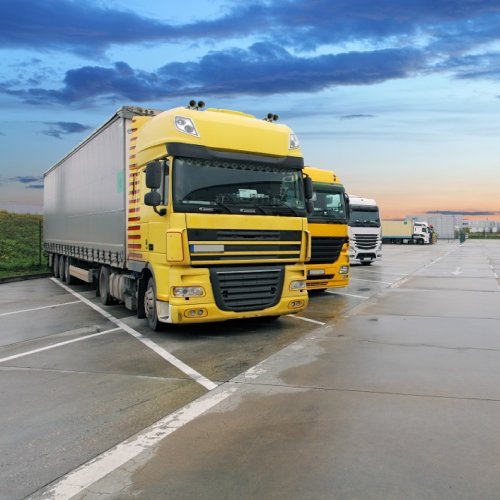
WE HAVE STANDARD SOLUTIONS TO ALL YOUR LAND FREIGHT REQUIREMENTS
We handle all shipping documentation and legal paperwork with clearing agents before your truck even leaves the yard — saving you time and avoiding delays at the border, and it helps our customers to save time and money.
- Full truck load (FTL)
- Less than truckload (LTL)
- Documentation
- Customs clearance
- Bonded Freight Movements from free zones
- Advice on insurance, letter of credit, certificate of origin
- Exhibition and Event cargo movements
- Personal cargo movements
- Vehicle import or export
- Over-dimensioned cargo movements
- Advice on Statutory approvals such as FANR approval, MOFA approval, SFDA approval etc.
- Cross-trade land freight in the GCC
- Duty Exemption stamp (Makasa)
- Exit certificate for VAT submission
- Guidance on Saber certificate, Conformity certificates, Phytosanitary certificate etc.
- Clearance under the TIR system
- Project cargo
- Transshipments
- Handling of door-to-door, DDP, Ex-works shipments
- IOR/ EOR Services
- Chemical movements
- ISO Tank movements
Not sure whether LTL or FTL road freight fits your shipment?
Get Efficient Land Freight Solutions for Your Business Needs
Bright Way Logistics Services LLC has been a trusted partner for road transport in Dubai and the GCC for more than 15 years. Our team handles everything from full trucks to special cargo and offers customized solutions based on your needs. With our strong network, we ensure your shipments cross GCC borders smoothly, and you face no hassles.
- Trusted land freight experts (15+ years of experience)
- Expert handling support for Gulf country shipments
- FTL and special cargo options available
- Smooth and fast border clearance solutions
Types of Trucks Available for GCC Land Freight
Land freight shipments have to be executed with extra care, as the freight forwarder should be alert 24×7 for smooth cargo movement. You can contact us anytime when we move your land freightshipments. We will be available at your fingertips all the time to solve the customs clearance issues and obstructions in transportation.
| Truck Type | Capacity/Size/Type | Best For |
| Dyna Trucks | 1, 3, 7, 10 ton pickups (open and closed) | Small to medium cargo |
| Box Trailers | 12 m, 13.5 m, and 15 m | General cargo and secure transport |
| Flatbed Trailers | 12 m, 13.5 m, 15 m, 16 m, and 18 m | Heavy and oversized cargo |
| Curtain Slide Trailers | 13.5 m and 15 m | Easy side-loading cargo |
| Reefer Trucks | 3 and 10 ton pickups, 13.5 m | Temperature-sensitive goods |
| Low Bed Trailers | Normal, hydraulic, front-loading, and back-loading | Heavy equipment and machinery |
| A-Frame Trucks | Custom | Glass, marble, and granite |
| Drum Trucks | Varies | Sand, blocks, and bulk materials |
| Heavy-Duty Trucks | As per the requirement | Large and heavy cargo |
| CICPA Pass Trucks | Specialized | Abu Dhabi project sites |
| PDO Trucks | Specialized | Oilfield transport (Oman) |
| Chemical Trucks | Specialized | Chemicals and hazardous cargo |
Whatever you’re moving — from a single pallet to oversized machinery — we match it with the right truck for the job.
Key Routes & Transit Times from Dubai
The UAE’s strategic location permits quick cross-border movement. In 2026, with the undertaking of real-time electronic data linkage between GCC customs, transit times have been further optimized.
| Destination | Major Route | Est. Transit Time (2026) |
| Saudi Arabia (Riyadh) | Ghuwaifat Border / Al Batha | 2 – 4 Days |
| Saudi Arabia (Jeddah) | Trans-Peninsula Highway | 4 – 6 Days |
| Oman (Muscat) | Hatta / Al Wajaja or Al Ain | 1 – 2 Days |
| Kuwait | Via Saudi Arabia Transit | 4 – 5 Days |
| Qatar (Doha) | Via Saudi Arabia Transit | 2 – 4 Days |
| Bahrain | King Fahd Causeway | 3 – 5 Days |
Pro Tip – Transit times can differ depending on customs clearance speed. Working with proficient land freight companies in Dubai confirms that your paperwork is pre-cleared technically to sidestep border bottlenecks.
Important GCC Shipping Rules — Avoid These Costly Mistakes
Points to remember when moving shipments by land to GCC
- Cargo must be palletized to avoid fines and additional loading/offloading expenses.
- The shipper and consignee should have an authorized clearing agent at the origin and destination.
- Separate documents should be prepared for UAE-origin and other-origin goods.
- Bahrain shipments must be pre-cleared after exiting the truck from the Sila border before reaching the truck at the Bahrain border.
- Shipments of Free Zone companies will not be cleared from the Sila border without a Free Zone BOE.
- Made in the UAE goods are not allowed to be imported to Qatar.
- Only box trucks are allowed for transit shipments (Kuwait, Bahrain, Qatar, and Jordan) if the dimensions are standard. Open trailers can be used only when the dimensions of the cargo are more than 4 meters.
- Bahrain shipments have to be loaded carefully to avoid penalties on the Bahrain Causeway.
- 1-ton pickups are not allowed to be used for GCC Land transportation, 3-ton and 7-ton pickups are not allowed for Kuwait shipments.
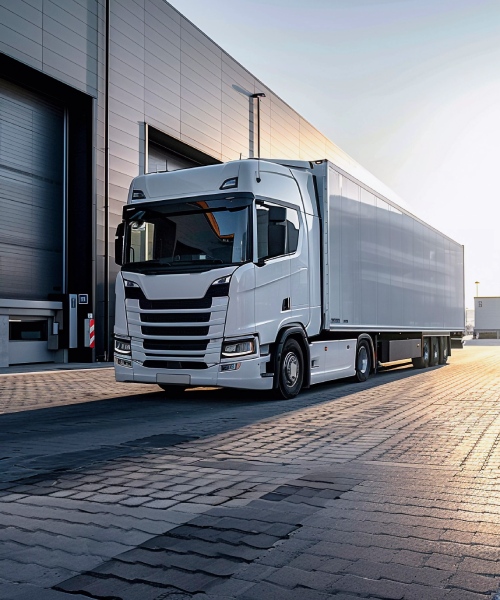

Key Documents for Land Freight in UAE and GCC
When moving goods throughtruck transport in the UAE and across GCC countries, proper paperwork is very important. Bright Way Logistic Services LLC helps clients with this and ensures smooth customs clearance.
Key documents required for GCC land freight:
- Commercial Invoice: Details of goods, quantity, and total value
- Packing List: Information on weight, dimensions, and packaging
- Certificate of Origin: Confirms where the goods are manufactured
- Bill of Lading (BOL): Proof of shipment between shipper and carrier
- Customs Declaration: Required for UAE customs with shipment details
Hidden Charges in UAE Cross-Border Freight
Most businesses focus on the base freight rate but overlook charges that add up quickly on cross-border land shipments from UAE:
Demurrage & Detention — Cargo held at border due to incomplete documentation can cost AED 200–500 per day. Working with a freight partner who pre-clears documentation eliminates this entirely.
Incorrect HS Code — Wrong commodity classification leads to re-inspection, fines, and delays at Saudi or Oman borders. A compliance-experienced partner handles this upfront.
SABER Non-Compliance — Shipments to Saudi Arabia require SABER certification for regulated products. Missing this means cargo rejection at the border — and full return freight costs.
Route Inefficiency — Taking longer border crossings adds fuel cost and driver overtime. Experienced operators know which border — Ghuwaifat, Al Wajaja, Hatta — is fastest for each GCC destination on any given day.
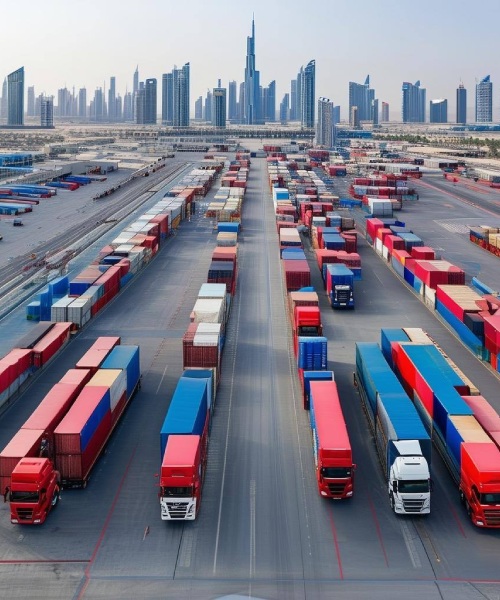
How Our Land Freight Transport Works in UAE
If you need to deliver your goods within the GCC, you should opt for land freight solutions. This option is cheaper than air freight and offers a flexible delivery schedule advantage. Businesses trust our freight services for different cargo types.
Booking & Cargo Pickup
Firstly, you need to share your shipment details, like weight, size, destination, and types of goods. Our team suggests FTL, LTL, or special cargo solutions based on your needs.

Documentation & Customs Preparation
We help you prepare all the necessary documents and ensure your shipments comply with both UAE export laws and destination country regulations.

Border Clearance Process
When transporting goods across the GCC, our trucks pass through border checkpoints. Our team handles clearance procedures at the borders and coordinates with the customs officials.

Transit & Tracking
Your shipments are transported across the GCC using specialized trucks. Our professional drivers ensure your shipments reach the destination on time.

Final Delivery to Destination
Your cargo arrives at the final location, where we unload it and check it against the delivery note. Our GCC haulage support also includes door-to-door delivery solutions.
Need fast and reliable road transport across the UAE and GCC?
Why Choose Brightway Logistics Services LLC in UAE?
Cross-border shipping must be simple, and Brightway Logistics delivers special solutions to help our valued clients. We operate as a top-rated truck transport service provider in Dubai that offers premium services in the UAE and other countries in the Gulf region. With our expert team, massive transport network, and advanced fleet, you can safely move your goods.
- Smart Routing for GCC Land Freight: We help you create a perfect route plan to reduce delivery times and unnecessary costs. We plan the most efficient route for every shipment, factoring in checkpoint wait times and road conditions.
- Advanced Shipment Tracking: You and your customers can track your cargo’s exact location throughout the journey, with regular status updates. throughout the transport route. We use advanced tracking tools and provide regular updates on shipment status.
- Door-to-Door Land Freight Support: With Brightway Logistics, you don’t have to worry about delivering shipments to even remote locations across the GCC region. Our door-to-door land transportation solutions are available for vast routes.
- Cost-Effective LTL Solutions: Don’t need a full truck? Our LTL option lets your shipment share space with others — same reliability, lower cost. This cost-effective transport option helps you save better, and we also ensure that combined shipments are delivered safely.
Cost vs Speed: Choosing the Right Option
Not every cross-border shipment has the same priority. Choosing between FTL and LTL — or between direct delivery and hub-based consolidation — depends on two factors: urgency and volume.
| Shipment Type | Best Option | Avg Cost Saving |
| Large volume, flexible timing | FTL consolidated | 15–20% vs ad-hoc booking |
| Small load, regular route | LTL / groupage | 30–40% vs FTL |
| Urgent, time-critical | Direct FTL | Speed over cost |
| Multi-country GCC | Hub-based distribution | 25–35% overall |
For most UAE businesses shipping regularly to GCC countries, a monthly contract with a single freight partner who covers all GCC routes delivers the best combination of cost control, priority handling, and documentation support.
Need Trusted Land Freight Services in UAE?
Brightway Logistics Services LLC provides premium land freight services in UAE and other countries in the Gulf region. You can secure seamless movement of your shipments across the Emirates, GCC, and beyond by choosing us as your trusted land freight partner.
Let Bright Way Logistics Services LLC help you with trusted and cost-effective road cargo support across the UAE and GCC.
Frequently Asked Questions (FAQs)
Land freight from the UAE usually takes 1 to 2 days to reach Oman or KSA. The exact transit time depends on how quickly the truck clears the border and what is the delivery destination.
You need to prepare documents like a commercial invoice, a packing list, a certificate of origin, and other transport documents for using land freight in Dubai and the GCC.
You don’t need to pay for a full truck to move small shipments using our LTL land freight services in Dubai. This option helps you reduce costs, as your goods share truck space with other shipments.
Bright Way Logistic Services LLC offers door-to-door delivery service. This means we pick up the goods directly from your warehouse or office and deliver them to the final address anywhere in the GCC.
Land freight transport solutions are best for heavy machines and oversized cargo. We use special trucks and trailers to move massive items across GCC that can’t be shipped on an airplane.
Brightway Logistics uses advanced tracking systems, so our clients can monitor their shipments until the delivery is complete.
You can transport almost any type of goods using our land freight services in UAE, including commercial cargo, machinery, retail goods, and others.
We prepare all required documents — Certificate of Origin, invoice, and customs paperwork — in advance, so inspection delays at the border are rare.
Land freight in Dubai is much more budget-friendly than air freight. While planes are faster, trucks are the best choice, especially when moving heavy or bulky goods across the GCC.
We offer express land freight services in UAE for urgent deliveries. By using our specialized services, you can get your shipments delivered in major cities in just 24 to 72 hours.