
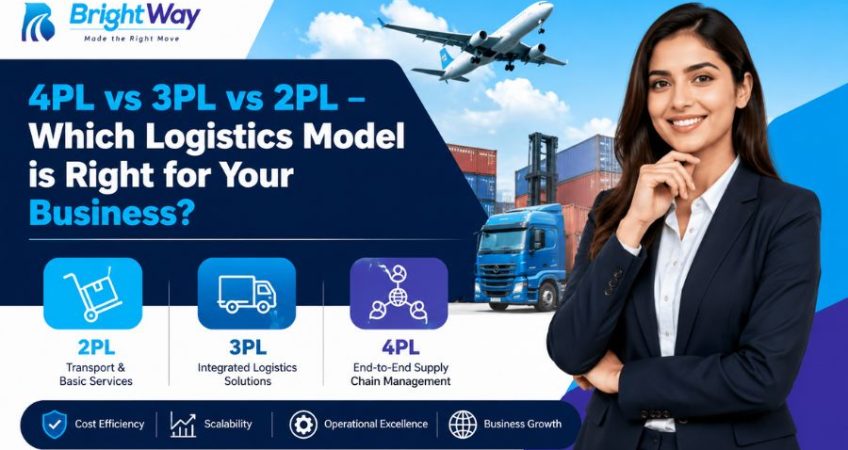
Selecting between 2PL, 3PL, and 4PL models based on your business’s size, supply chain complications, and expansion stage. While 2PL is the most suitable for controlling shipping expenses directly, 3PL sales e-commerce fulfillment, and 4PL works as a strategic manager for big, multi-faceted companies.
Operating a business includes a number of moving parts. One of the most crucial parts is getting your items from the factory floor into your customer’s hands. This whole procedure is renowned as supply chain management. As your business expands, managing shipping, storage, and distribution by yourself can become daunting. That is where external logistics providers move in to help.
When hunting for a logistics company, you will frequently come across the term 2pl. 3pl vs. 4pl logistics. The PL stands for party logistics. But what is the difference between them and how do they compare to a 2PL model? Let’s find out this to assist you in determining which system fits your business functions.
What is 2PL?
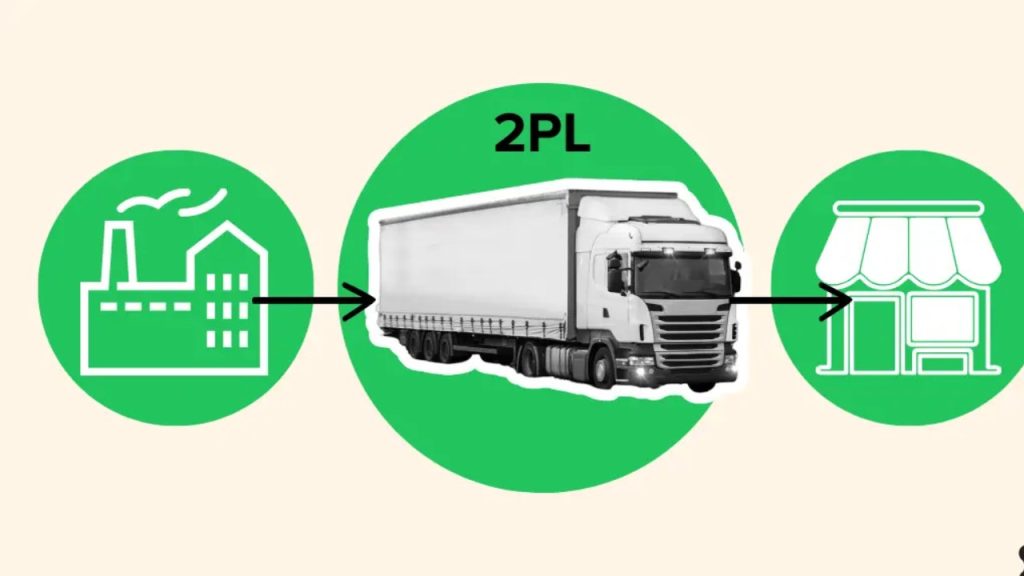
A 2PL method includes an asset-based corporation that owns the physical transport tools utilized to move goods. If you appoint a particular airline, specific airline, shipping line, or trucking company to move a container from point A to Point B, you are performing with a 2PL provider.
How 2PL Works?
In this system, your business retains proper control over warehouse management, inventory tracking, and packaging. You just hire in 2PL operator as a direct subcontractor to implement the physical transportation stage.
1. Pros 2PL –
- Direct Cost Control – You pay explicitly for transport space or mileage.
- Simplicity – It delivers a simple, transactional connection for common hauling requirements.
2. Cons 2PL m –
- High Operational Burden – Your internal team should still manage the complicated duties, including warehouse companies, customs clearance, and last-mile coordination.
- Limited Scalability – If your order volumes suddenly spike, you have to manually protect extra transport capacity.
What is 3PL?
3PL in logistics represents a profound level of outsourcing. When a business partners with a third party logistics UAE provider, it hands over both the storage and transportation of its products to a professional.
A 3PL company UAE works as a seasonal fulfillment partner. They get your inventory, store it protectively in their fulfillment centers, and manage the picking, packing, and final delivery when an order reaches.
Key services given by a 3PL provider –
- Inventory storage and warehouse management.
- Order fulfillment
- Freight forwarding and customs clearance through a seasoned transport and logistics company in UAE.
- Return processing
1. Pros of 3PL –
- Resource Optimization – It frees your company to concentrate on main strengths like product growth and marketing.
- Cost Efficiency – By sharing warehouse space and carrier networks with other companies, you save remarkably on infrastructure overhead.
- Flexibility – Scales smoothly to accommodate seasonal need spikes or promotions.
2. Cons of 3PL –
- Decreased Direct Control – You hand over regular oversight of stock management and fulfillment quality.
- Variable Expenses – Monthly expenses fluctuate directly with your inventory volumes and order fulfillment rates.
What is 4PL?
A 4PL provider introduces an extremely strategic layer of management. Frequently referred to as a lead logistics provider, a 4PL company typically runs as an asset-light integrator. Instead of owning the trucks or warehouses itself, a 4PL handles the whole supply chain network on behalf of the client.
How 4PL Works?
Consider a 4PL provider as the devoted logistics department of your company. They supervise your 3PLs, transport carriers, customs agents, and software systems, unifying them under a single point of administration. They rely heavily on data analytics and cloud software to optimize every stage of your supply chain.
1. Pros of 4PL –
- Complete Supply Chain Visibility – Delivers a single point of contact supervising the whole network.
- Technology-Driven Insights – Utilizes modern logistics platforms to optimize transit routes and forecast inventory demands.
- Strategic Growth – Redevelopments and simplifies your functional procedures to remove waste and decrease long-term expenses.
2. Cons of 4PL –
- High Dependency – Your functional workflow becomes profoundly tied to the provider’s software systems and administrative health.
- Higher Initial Investment – Strategic incorporation expenses are more advanced than transactional 3PL services.
Direct Comparison – 3PL vs 4PL Logistics
Comprehending the main functional differences between these models is crucial for making a knowledgeable business decision.
| Feature | 3PL (Third-Party Logistics) | 4PL (Fourth-Party Logistics) |
| Primary Focus | Daily execution of storage, packing, and shipping tasks. | Strategic management and holistic optimization of the supply chain. |
| Assets Owned | Often owns physical trucks, fulfillment centers, and equipment. | Typically asset-light; relies on specialized software platforms. |
| Business Relationship | Transactional and execution-focused. | Deeply collaborative, advisory, and long-term. |
| Scope of Coordination | Manages a specific portion of logistics operations. | Oversees every vendor, including multiple 3PLs and carriers. |
| Client Point of Contact | Handles customer inquiries regarding individual shipments or stock counts. | Serves as a single point of integration for the entire global supply chain. |
3PL vs. 4PL vs 2PL – Which Model Fits Your Business?
Selecting the appropriate partner depends on your corporation’s functional scale, expansion stage, and long-term budget.
1. Select a 2PL model if –
- You handle a small local business with your own warehouse team.
- You just require a trusted transport provider to haul raw materials or bulk shipments over fixed routes.
- You hold the internal team resources to handle inventory, tracking, and client service yourself.
2. Select a 3PL model if –
- You operate a quickly expanding e-commerce or retail brand growing across the GCC region.
- Sustaining or leasing private warehouse space has become very costly.
- You have to delegate choosing, packaging, and shipping tasks to an expert 3PL logistics companies in Dubai to free up internal resources.
3. Select a 4PL model if –
- You function in a big company with international sourcing and extremely intricate allocation networks.
- Handling several disparate 3PL vendors and freight forwarders has become very complicated for your group.
- You wish an outsourced professional to thoroughly re-engineer, digitalize, and supervise your international supply chain infrastructure.
The Logistics Ecosystem in the UAE
The UAE works as a main international hub linking Eastern and Western trade corridors. Due to its strategic location, companies here encounter remarkable supply chain prospects and difficulties. Handling cross-border shipments, clearing regional customs, and making sure quick delivery requires professional local knowledge.
When you require an adaptable 3PL company in the UAE to handle local inventory allocation or an extremely coordinated structure for global freight, choosing an established partner like Brightway Logistics makes sure your functions operate seamlessly. Using localized specialization in supply chain management UAE permits your business to optimize delivery times, adhere to local trade rules, and scale effectively across local markets.
Final Thoughts
The appropriate logistics model is the one that permits your business to run seamlessly while keeping your clients happy.
If you wish to sustain control over your inventory and only require somebody to transport your goods, a 2PL model performs well. If you wish to offload warehousing, packing, and delivery to save time and money, collaborating with a 3PL provider is usually the perfect option. For huge enterprises requiring a strategic partner to handle several vendors and use modern data systems, a 4PL integrator is the ideal fit.
Take a close look at your current shipment volumes, infrastructure budget, and long-term growth objectives. Choosing the appropriate logistics structure lays a trusted base for your business to expand sustainably well into the future.